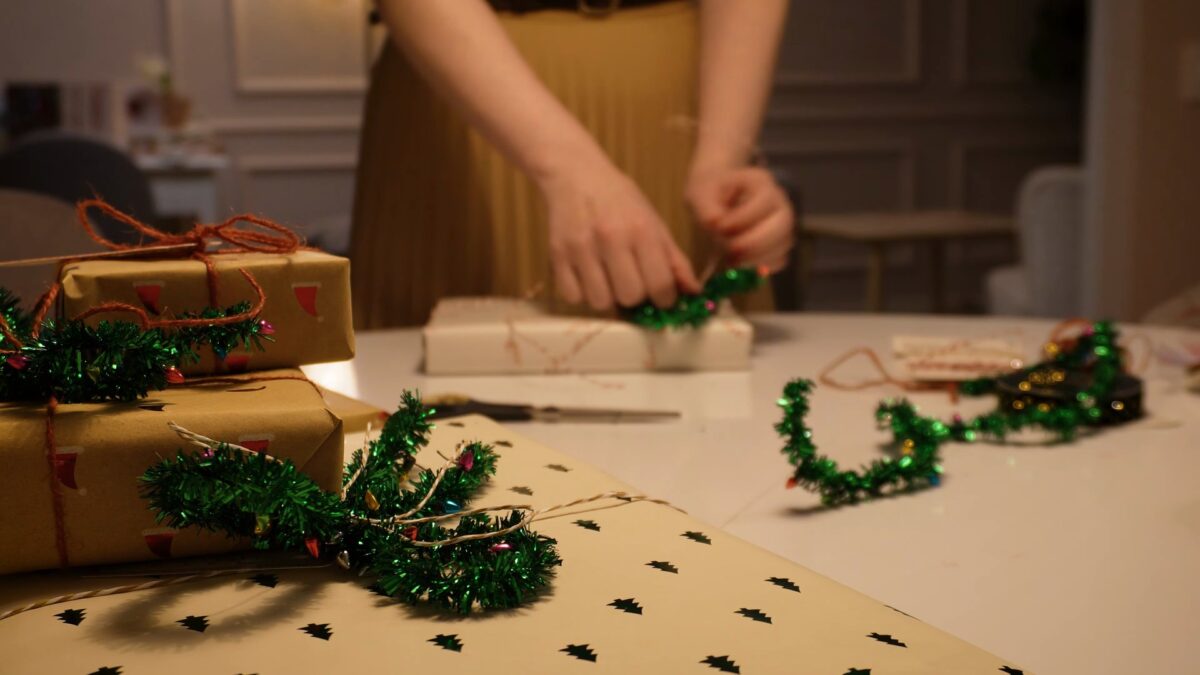
For most families, Christmas shopping begins in earnest after Thanksgiving, in a rush of countdown sales and crowded inboxes. There is a calmer way. Start the day after Halloween and aim to be finished by Thanksgiving, just as everyone else is getting started. The weeks in between are quiet, the best things are still in stock, and the people who make beautiful gifts by hand still have room in their calendars.
Three reasons make the early window worth it, and three popular videos sharpen each one: filmmaker Van Neistat’s rules of gifting, a short film from The Atlantic on why so many of us are bad at giving gifts, and rare book buyer Adam Weinberger’s insider guide to where rare books are found. The reasons come first, then where to buy six kinds of gifts that reward a little lead time.
Reason one: time to choose thoughtfully
Neistat’s formula is simple: “the best gifts are nice, made and thoughtful, but any two will be a good gift.” Thoughtfulness is the hardest of the three to fake in a hurry. His estimate is that “generally speaking, getting a good present takes two days,” with “one day to rack your brain, then sleep on it” and a second day to act on the idea. In mid December nobody has two days for every person on the list. In early November you do.
Derek Thompson of The Atlantic adds a useful correction. Givers tend to chase the moment of unwrapping, yet “recipients often want things that are far more practical.” In one study he describes, “givers reliably chose the desirable gifts” while recipients preferred the ones they could actually use. His conclusion: “Surprise is overrated.” Instead, “find out what the people that you love want” and get it for them.
That takes listening, and listening takes time. Neistat points out that people mention what they want in passing, rarely when asked, so “pay attention because they will tell you,” and when they do, “write it down.” A running note on your phone through the autumn becomes the shopping list in November.
Reason two: small makers need lead time
Small businesses and individual artisans work in small batches. A ceramicist fires a kiln when it is full, an engraver works through orders one at a time, and a commission can take weeks of back and forth. Ask in the second week of December and the answer is often no, or yes with a rush fee. Ask in early November and you join the queue while there is still a queue to join.
Lead time also buys the finishing touches. Neistat says dating or monogramming “gives the gift extra power,” and a professional engraver, a monogrammed leather piece or a dealer’s inscription all need days, not hours. Buying early is also the kindest way to support a maker, because a calm order placed weeks ahead is far easier to fill well than a frantic one.

Reason three: step around the holiday ads
From late November on, advertising gets louder and less discerning. The season fills with novelty sets, gadget bundles and things made to be bought rather than kept. A finished list is the best filter there is. When the ads arrive you have nothing left to buy, so you can simply let them pass.
Neistat’s phrase “expensive, not costly” is a good guard against filler. A beautiful bar of chocolate or the best pair of socks someone will ever own costs little, yet it is the finest version of its kind. One well chosen thing almost always beats a box of extras.
What to buy: rare or premium books
A first edition of a book someone loves is a gift they will keep for life, and it is easier to find than most people think. As Weinberger puts it, “rare books are not really rare,” so a handsome early edition of a favorite author is well within reach. On AbeBooks, which he calls “the preeminent listing site for used out of print and rare books,” check the newly listed books, where dealers post fresh finds, and get a signed copy when one is available. The Boston International Antiquarian Book Fair, November 6 to 8, puts dozens of dealers in one room.
If the hunt feels like too much, buy new. Easton Press still binds classic and modern titles in genuine leather, with gilded edges and sewn bindings, so the book arrives looking like an heirloom.

What to buy: art and sculpture
For paintings, prints and photographs, buy from the gallery that represents the artist or from the artist’s own studio, so the work comes with proper provenance and the artist is paid fairly. Artsy gathers works from galleries around the world and lets you contact the gallery directly about a piece. Framing often takes several weeks, which is one more reason to decide in November.
For sculpture and fine craft, the American Craft Council’s online artists directory lets you browse makers by medium, from ceramics and glass to wood and metal, and reach them about available work or a commission. For antique and vintage sculpture, 1stDibs lists inventory from established dealers. When the piece is going into someone else’s home, a small bronze or a carved bowl is a safer choice than a large statement piece, since it fits almost any room and is easy to love.
What to buy: fashion
Buy directly from independent designers through their own shops, so more of the price reaches the person who made it. Ask about made to order and monogramming lead times before you fall in love with a piece, because knitwear, tailoring and leather goods from small studios are often produced in short runs. For vintage designer pieces and fine jewelry, 1stDibs is a reliable dealer marketplace.
Fashion is where precision matters most. Sizes, colors and the exact item someone mentioned all count. As Neistat puts it, “take note, be precise.” Ask about exchanges too, and buy early enough that an exchange can happen before the holidays.
What to buy: plants
A living gift keeps giving long after the wrapping is gone. White Flower Farm in Connecticut ships amaryllis bulbs and other holiday plants as gifts, and at checkout you can choose a shipping window, including one timed to arrive by Christmas Eve. Logee’s, a family greenhouse in Danielson, Connecticut, founded in 1892, ships rare tropical, fruiting and citrus plants. A potted lemon tree can outlive the memory of every other gift that year, though citrus cannot be shipped to a few states, including California, Florida, Arizona and Texas.
Specialty nurseries ship around the weather to protect their plants, so ordering early lets them choose a safe week rather than a desperate one.
What to buy: artisan foods
The Good Food Awards, run by the Good Food Foundation, is a fine starting point. Its 2026 winners list names 242 products from 198 makers across 18 categories, from cheese and charcuterie to chocolate and preserves. Zingerman’s Mail Order in Ann Arbor, Michigan, ships breads, cheeses and pastries, and Rancho Gordo in Napa, California, sells heirloom beans that turn a weeknight supper into an event.
For anything perishable, order in November and choose a delivery date close to the holiday. You keep the early decision and the fresh arrival.
A simple plan for your Christmas shopping
- November 1: write the list, using your notes from the year.
- First week: commissions, made to order fashion and engraving, since they need the longest lead time.
- Second week: rare books and art, including framing.
- Third week: plants and foods, with delivery dates scheduled.
- Thanksgiving: wrap what has arrived, and enjoy a December free of the shops.
Finishing early turns December into the season of concerts, dinners and quiet evenings it is meant to be. For more on shaping free time with intention, see our guide to leisure planning and our winter arc plan for free time.
Watch: three guides to better gifts
Van Neistat shares his rules of gifting, from thoughtful made gifts to signed books.

Derek Thompson of The Atlantic explains why so many of us are bad at giving gifts, and how to do better.

Rare book buyer Adam Weinberger walks through the dealers, fairs and sites where he finds rare books.

Living with Mandu wraps gifts in kraft paper and twine during a slow, quiet Christmas in Sweden.