XREAL AURA finally has a price. On October 7, XREAL said its glasses start at $1,279 with 12 gigabytes (GB) of memory and 256GB of storage, or $1,499 with 16GB and 512GB, and that they will reach customers in the United States, Canada, Japan and South Korea this year. AURA runs Android XR, Google’s operating system for extended reality (XR), the umbrella term for virtual reality (VR) and augmented reality (AR). Then on October 22, Owlchemy Labs, the Google-owned studio behind Job Simulator, revealed a $1.99 launch game called Hyper Visor. So the question is no longer what AURA is. It is whether a pair of shades with a giant screen inside fits the way you actually spend your free time.
What makes XREAL AURA different from a headset
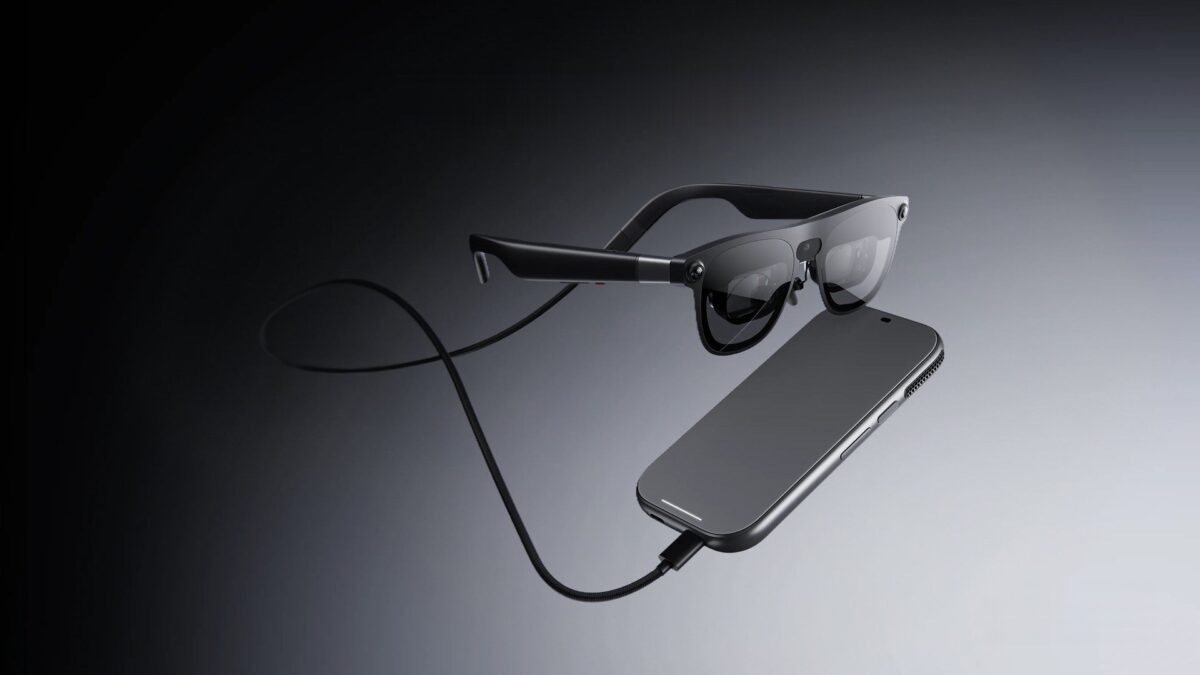
AURA splits the hardware in two. XREAL says the glasses weigh less than 95 grams, and a cable runs to a compute puck about the size of a phone that holds the battery and the processor. The puck runs Android XR with Google Play, doubles as a trackpad, and clips to a pocket or a lanyard. Cameras on the glasses track your hands, so you can move and resize windows in the air with gestures.
The bigger difference is how you see the world. A headset shows you a camera feed of your room. AURA lets you look straight through the lenses. As tech reviewer Jon Rettinger puts it, “You are looking through real glass at a real room.” When you want a show or game to take over, the lenses darken electronically. Nathie, a longtime VR reviewer, opened Google Maps with the lenses fully dimmed and called it “the first time I genuinely felt like I was partly wearing a VR headset.” He also says that after a few minutes, “I honestly kind of forgot I was wearing it.”
Couch gaming on a screen the size of your wall
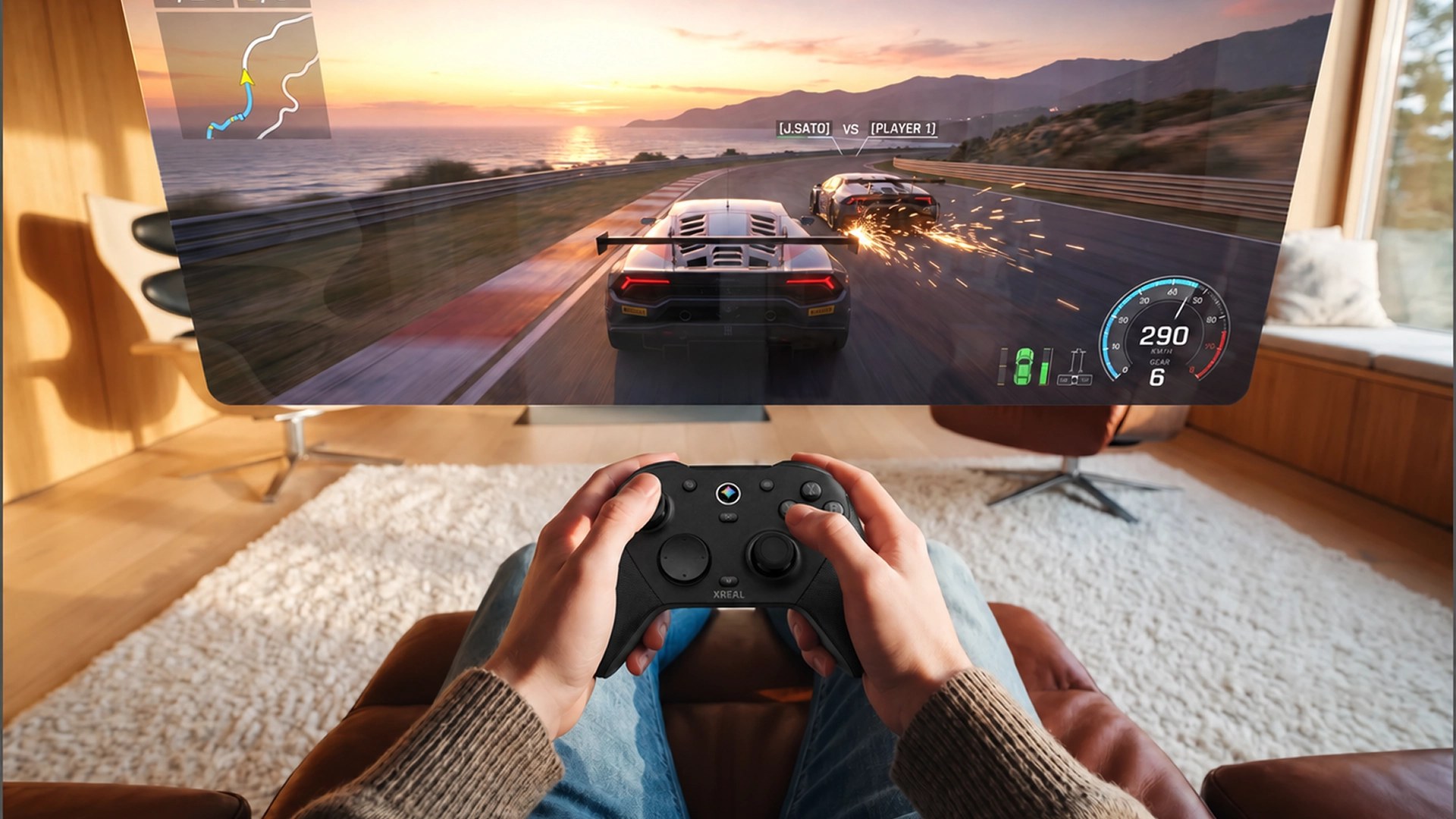
For gamers, the clever part is the second USB-C port on the puck. Plug in a handheld and its picture becomes a floating window you can scale up. Rettinger describes plugging “a Steam Deck or Switch 2 right into the puck and your game blows up kind of wall size hanging in the air while you’re still parked on a couch.” Norm Chan of Adam Savage’s Tested also tried the glasses plugged straight into a Steam Deck, skipping the puck, and says the 70 degree field of view “really surprised me.” On text and detail, he adds that “nothing looked jaggy, it looked sharp and very very playable.”
Because the handheld is just one window, you can keep others open beside it. Norm imagines holding his Steam Deck “scaled up like a giant screen, and then watch a Twitch stream, watch a YouTube video” while still seeing the real room. XREAL chief executive Chi Xu told Tested the same idea works with a console, so you can play while you “watch a tutorial walk-through about this game at the same time.” Nathie found the fast refresh rate of 120 hertz “nice, especially for faster-paced stuff like Rocket League,” and Google’s Gemini artificial intelligence (AI) assistant can see the game too. “If you’re stuck, literally just ask out loud and get an answer while you are playing,” Rettinger says.
Games that use the room around you
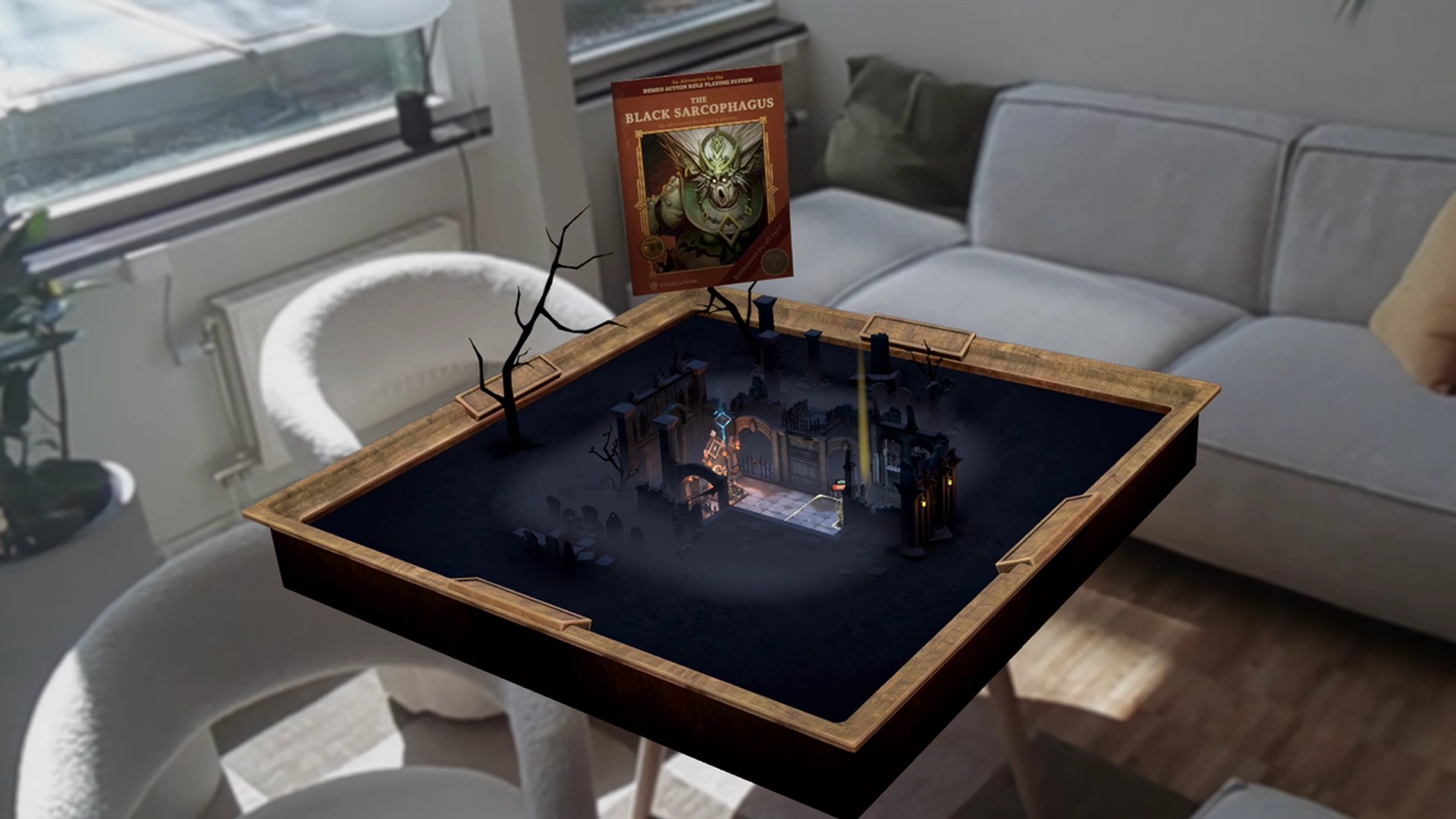
AURA also runs games built for the space you are sitting in. XREAL’s product page shows Demeo, the dungeon crawling board game, laid out across a real coffee table, and says there are over 150 apps made specifically for XR alongside the regular Google Play catalog. Owlchemy Labs adds a lineup at launch: Job Simulator, Vacation Simulator, Dimensional Double Shift and Inside [JOB], plus the new Hyper Visor. In Hyper Visor, a pair of living shades reveals rifts hidden in your own room, and you blast them with an energy stream fired from your hands across eight levels, each ending with a boss.
Owlchemy’s chief executive, Andrew Eiche, says the hardware is the point. “Our core philosophy is XR for everyone, and for a lot of people the biggest barrier has been the headset itself,” he said in the studio’s announcement. “XREAL Aura is essentially a pair of shades, which makes XR far more approachable for anyone who may have been hesitant to put on a headset before.” That matters for family game time. A relative who would never strap on a headset may happily try a pair of sunglasses for a few rounds.
Movies, sidelines and travel
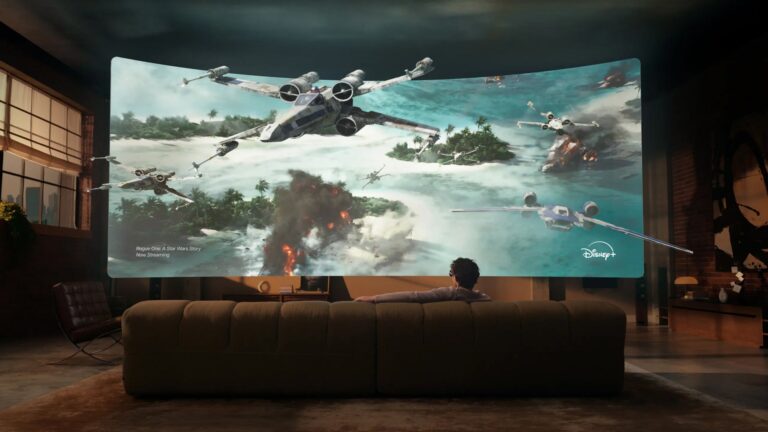
Downtime is where AURA gets interesting. Rettinger, who coaches his sons’ baseball team, points out that youth sports are “about 10% of the actual sport, 90% usually sitting in a folding chair waiting.” With the lenses clear, you can watch a show and still glance up when your kid comes up to bat. “Nobody around you sees a huge headset, they just see a dad in a camp chair,” he says. At home, the same glasses that hold up to five floating windows for work turn into a theater. “The second I clock out, I can also throw a movie up the size of my wall.”
On the sound side, Nathie found the speakers tuned by Bose “could get surprisingly loud while keeping audio leakage to a reasonable level,” though he wanted more bass for music. Earbuds are still the polite choice on a plane, where XREAL says a travel mode keeps your view steady in flight. YouTube’s library of 180 and 360 degree videos also plays as immersive scenes, which makes a nice way to preview a trip before you book it.
What to weigh before you buy
- The cable. “The catch you’ll actually feel of course is the cable, the tether attached to the puck,” Rettinger says. Plan where the puck lives. Nathie noticed some heat build-up with it in a pocket.
- Battery life. No one knew it at the hands-on events. Nathie’s answer to the battery question was “Nobody knows,” and XREAL’s pricing announcement did not list a figure either. Wait for full reviews if you want a whole flight on one charge.
- Small text. Nathie found the image “sharp enough for entertainment purposes, but for productivity, I experienced smaller text as challenging.” Movies and games are the sweet spot.
- Flat apps. Most Android apps are the same ones on your phone, shown as flat windows. Nathie’s view is that “content is king,” so the number of true XR games will decide how much you use it.
- Fit. XREAL lists two sizes, M for 60 to 66 millimeters and L for 66 to 72 millimeters, so check the fit guidance when you order, and try a pair in person if you can.
- Early impressions. Rettinger and Nathie both note that XREAL sponsored their videos, and Rettinger says his unit was “pre-release hardware that was demoed in a very tightly controlled hotel suite.” Tested’s hands-on came from the Augmented World Expo in June.
Is XREAL AURA right for your downtime?
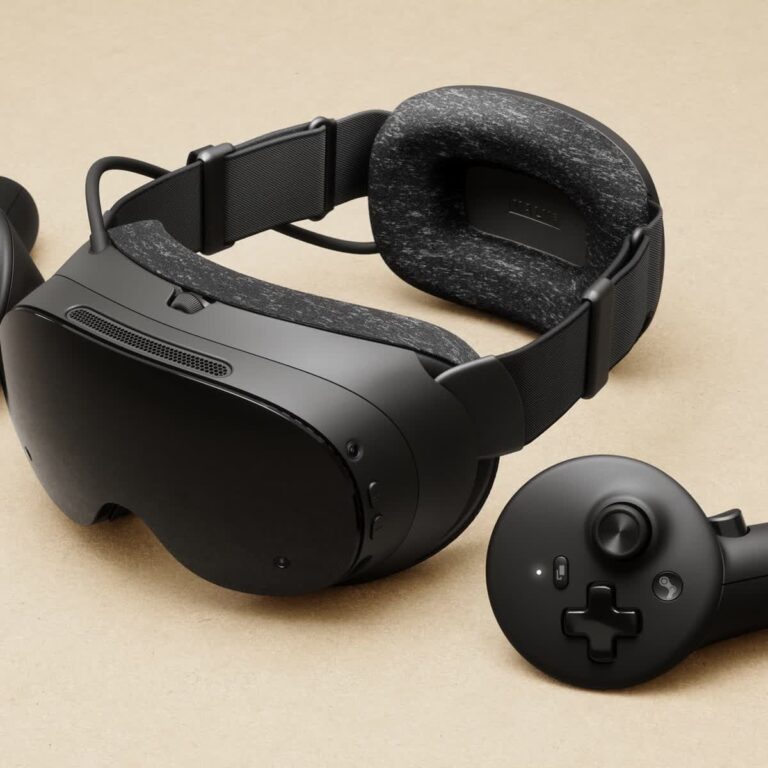
AURA makes the most sense if you already game on a handheld, watch a lot of shows away from your TV, or spend hours on sidelines and in waiting rooms, and you want something lighter than a headset to fill that time. If you mainly want full VR games and fitness, a standalone headset is still the simpler, cheaper path, and our guide to Quest cinema and sports nights shows how far a headset you may already own can go. Gamers weighing a PC setup can compare it with Valve’s wireless Steam Frame. For more ideas, browse VR and Leisure.
Watch: three hands-on looks at XREAL AURA
Norm Chan of Adam Savage’s Tested tries AURA at the Augmented World Expo and talks optics and gaming with XREAL chief executive Chi Xu.

Nathie covers comfort, dimming, display sharpness, sound and apps in a first look sponsored by XREAL.

Jon Rettinger shows AURA on the sidelines, on the couch and at a desk in a video sponsored by XREAL.