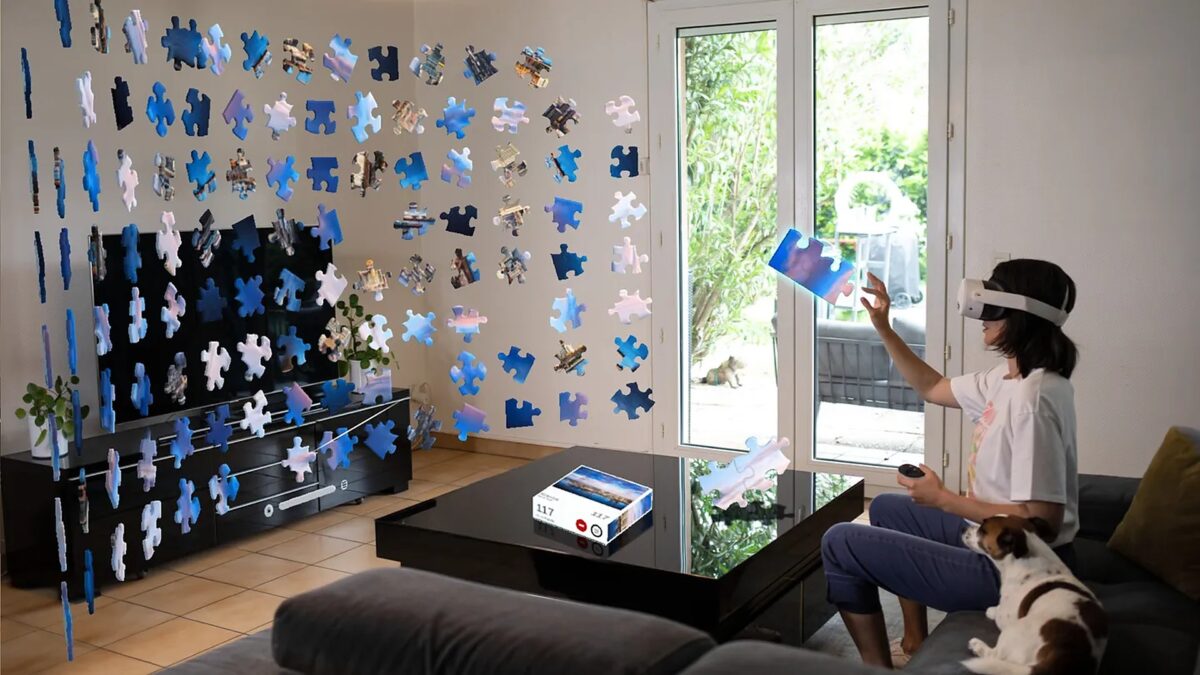
Imagine the whole family around one jigsaw puzzle on a winter night, laughing when hands bump over the same edge piece. Now imagine the puzzle floats in your living room, and a cousin three states away can pull up a chair. That is Jigsaw Night, a shared puzzle app for Meta Quest headsets.
The big takeaway from independent coverage? Playing in the same room is the star, and the online mode keeps faraway family in the game. Here’s how to set up both.
Why the same room feels like a real table
Here’s the thing: in mixed reality, your headset shows your real room, and the puzzle sits right on top of it.
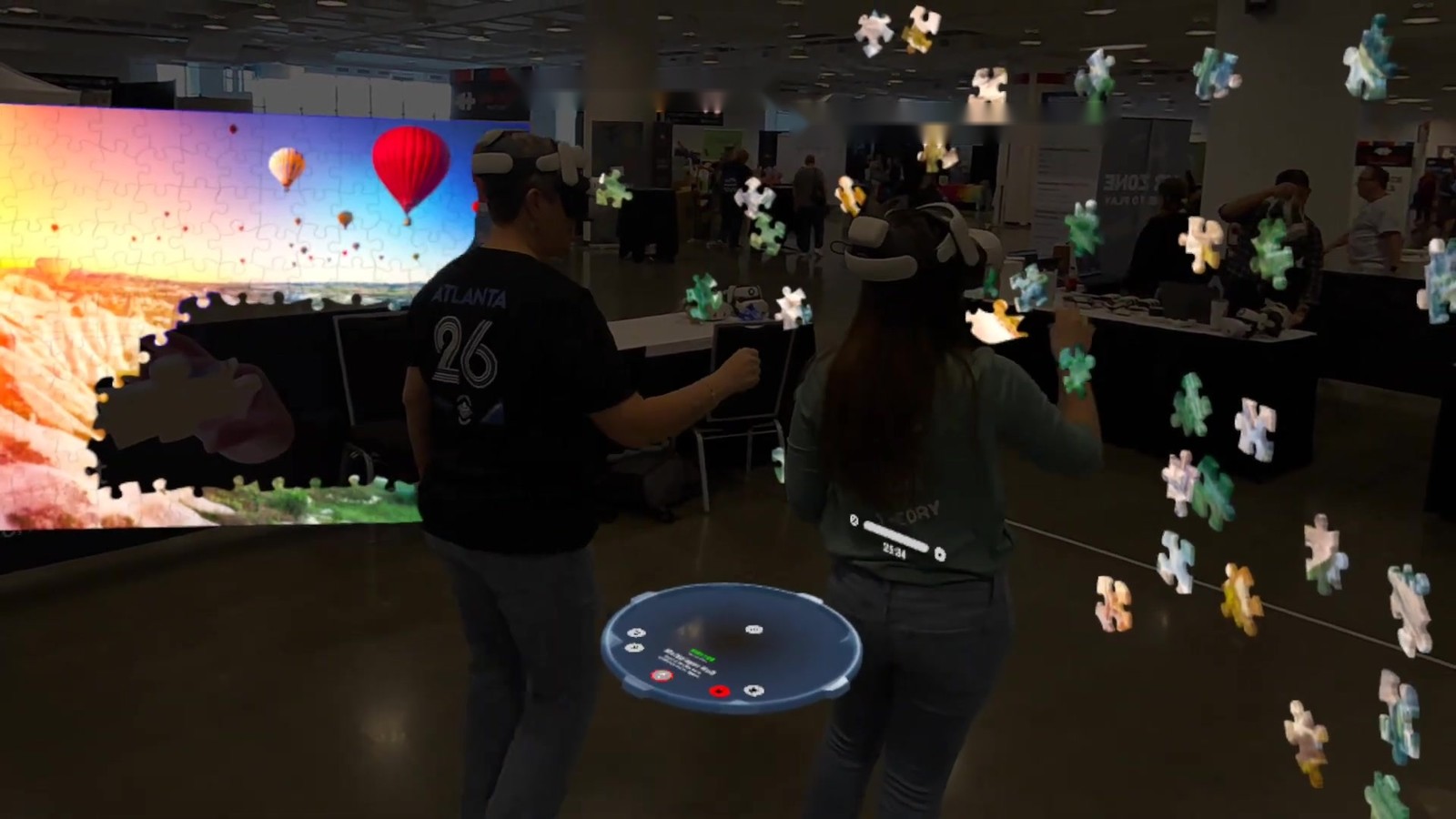
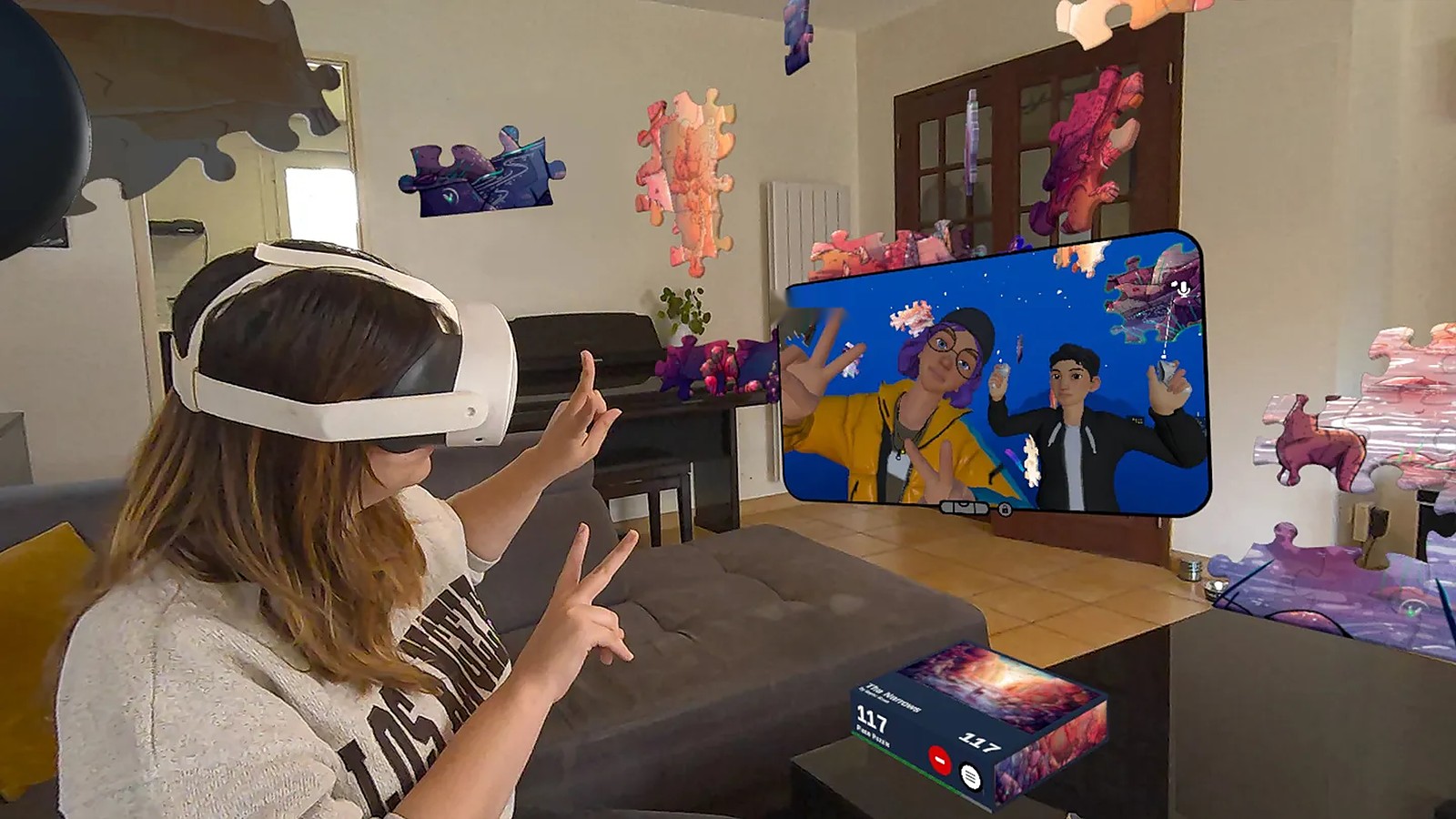
When everyone shares a room, the app pins one puzzle to the same spot for every player. You can pass pieces back and forth.
Ian Hamilton of UploadVR tried it in a hands-on preview, not a scored review, aboard the Queen Mary in Long Beach, California. He and another player bumped hands reaching for the same piece. He called the app “a master class in interaction design.”
A Good Virtual Reality video shows a mother and daughter who had never worn headsets. At a jigsaw convention in Atlanta, they hand pieces across within minutes. As one says, “this is a whole new level of puzzling together.”
Set up a same room puzzle night
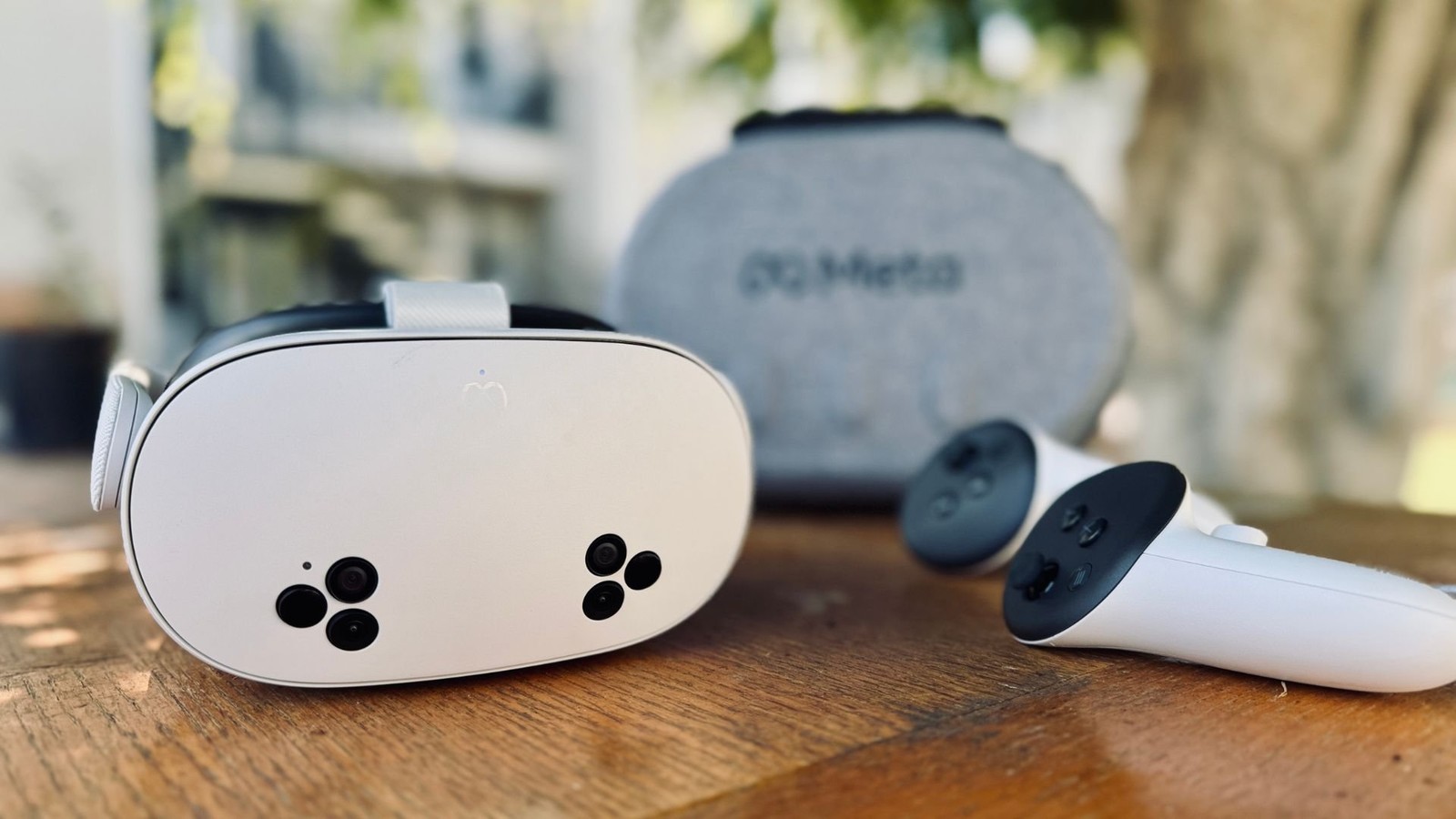
- One headset per player. The developer optimizes for Meta Quest 3 and Quest 3S, with limited support for Quest 2 and Quest Pro.
- A clear space. The app scans your room so the puzzle knows where the furniture is.
- One host. One player hosts a party, and the app locks the puzzle to the same spot for everyone.
- Hands or controllers. Newcomers can pinch or grab pieces with bare hands, and anyone can switch to the Touch controllers.
- A small first puzzle. Piece counts run from 8 to more than 500. YouTube creator Erik Hartley finished an 8-piece warmup in 23 seconds.
But there’s a catch. On the Good Virtual Reality podcast, Hamilton estimated that the shared anchors that line up everyone’s view work about 70 percent of the time. Developer Steve Lukas found that some headsets cause the trouble, so if the puzzle won’t line up, try letting a different headset host.
Invite faraway family online
The best part? Not everyone has to share your living room.
Lukas separates two ideas. Colocation means playing in the same room. Co-presence, in his words, “means being in a shared virtual environment with people remotely.”
Remote players appear as Meta avatars with voice chat, and puzzles run best with up to six players. Link a Facebook account to turn family photos into puzzles, so grandparents can rebuild old holiday snapshots with the grandkids.
The built-in LIV camera records the virtual scene with avatars, not your real room, so you can share a clip without showing your home.
Which mode should you choose?
Choose the same room when presence matters most. You see real faces and can point at the exact gap you mean. Choose online when distance is the problem.
Or mix both. Players can join midway, and the host can keep puzzling after they leave. As Lukas puts it, “you don’t need much more than people.”
A few final details. Lukas builds Jigsaw Night through his company, ContractXR, and it is still in early access on the Meta Quest Store. Solo puzzles work offline, while multiplayer needs internet. It is rated Everyone, and UploadVR named it the Best Hand Tracking Game of 2025.
Prefer cardboard? Try our guide to jigsaw puzzling.
Watch: See Jigsaw Night in action
Good Virtual Reality films two first-time players building a puzzle together in mixed reality.

Erik Hartley solves two puzzles and shows off the LIV camera view.

On the Good Virtual Reality podcast, Lukas and Alex Coulombe talk about bringing people together in shared headsets.