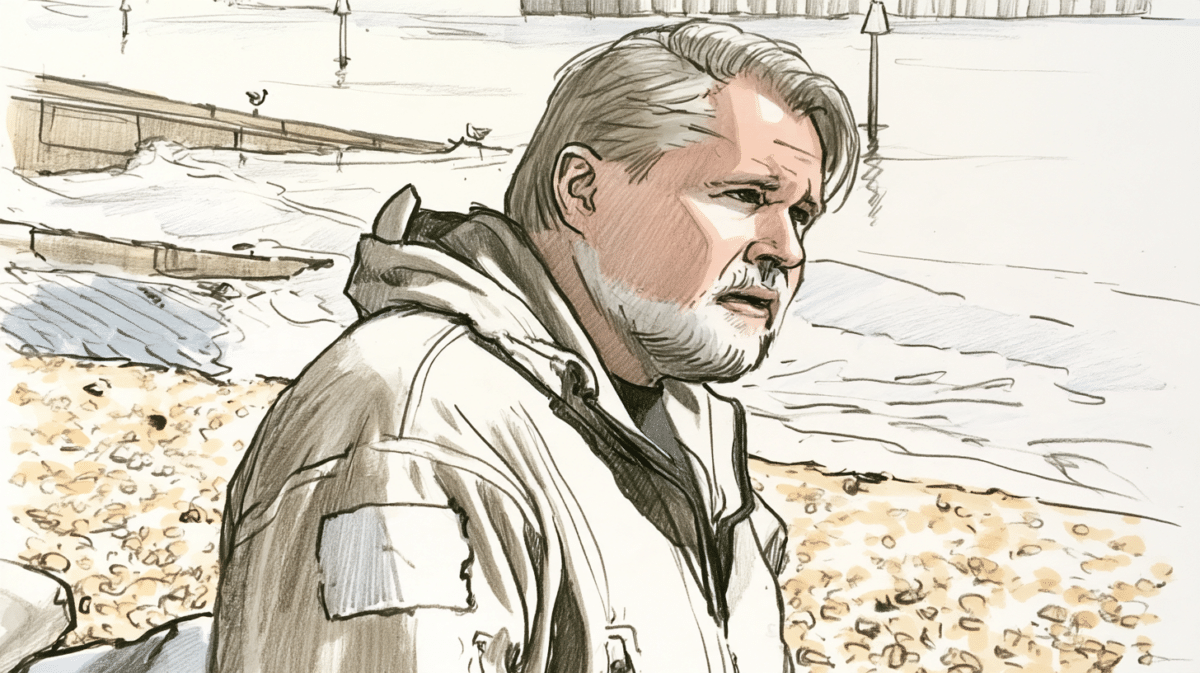
Most of us measure a good walk in steps, or in how many podcast episodes we got through. Karl Bushby measures his in decades. In 1998 the former British Army paratrooper set off from Punta Arenas, near the southern tip of Chile, with a simple and slightly mad plan: walk home to Hull, in the north of England, without using any form of transport and without going back to the United Kingdom until he arrived on foot.
On Monday 5 October 2026 he walked up Shakespeare Beach, just south of Dover, after swimming the English Channel over three days. He still had roughly 400 kilometres to walk to his mother’s house in Hull, and news reports expect him to finish in early November.
His story is full of things none of us will ever do: a jungle conflict zone, Arctic sea ice, a month swimming the Caspian Sea. But listen to him talk across three recent interviews and something more ordinary comes through. Underneath the drama is a man who simply kept walking, day after day. That part is something any of us can borrow.
A quick look at the journey
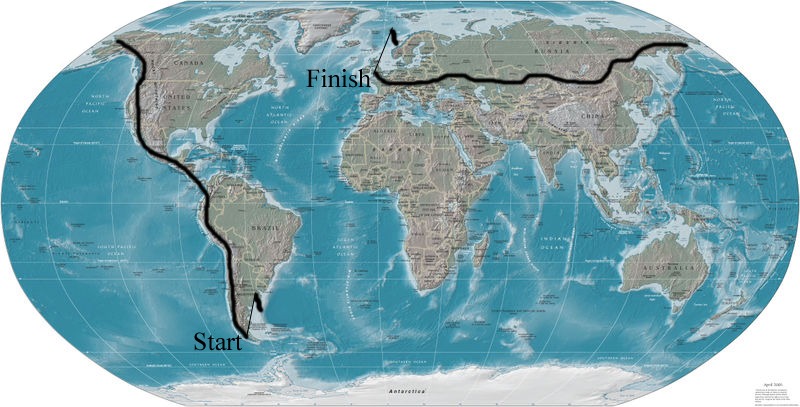
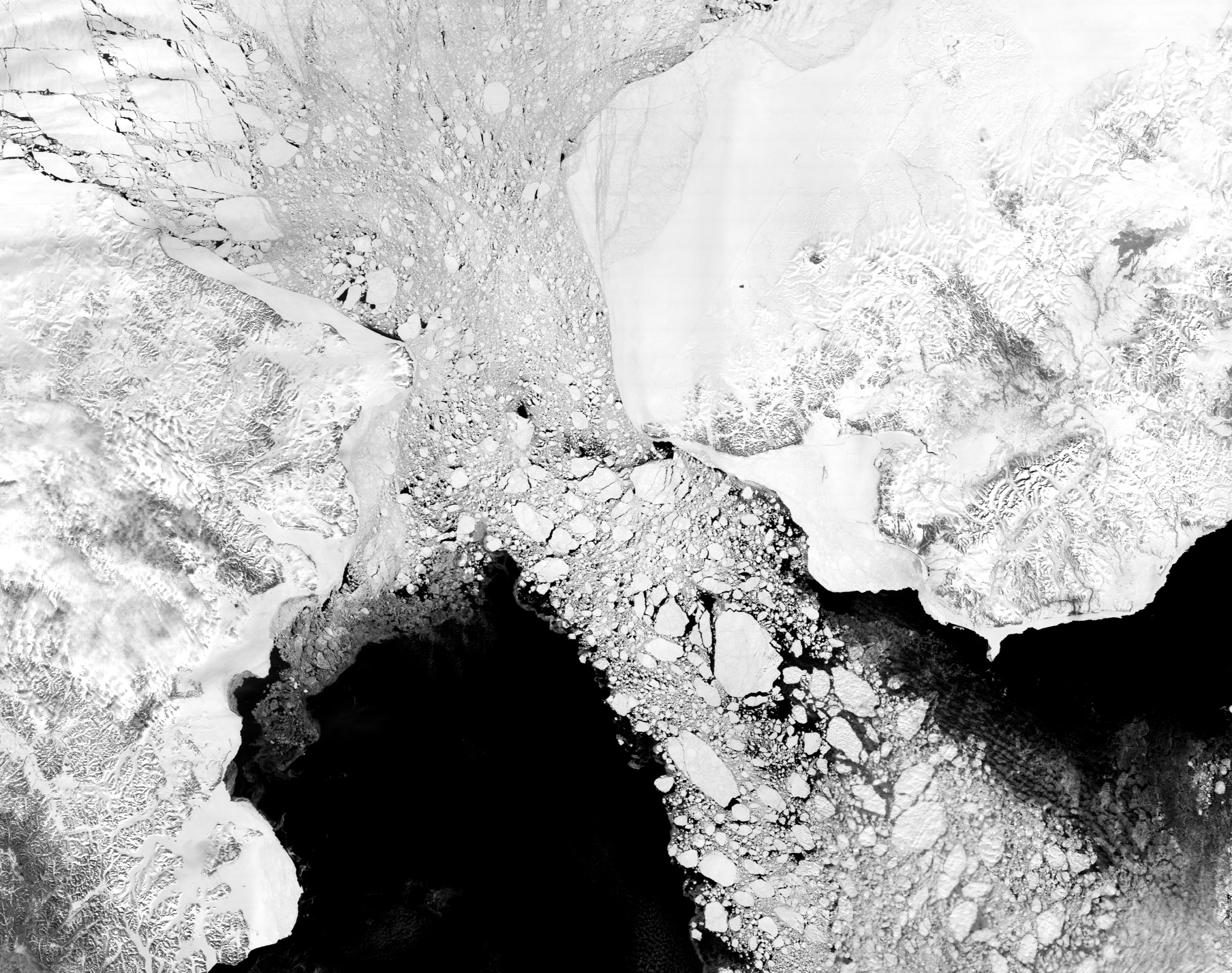
Bushby calls the project the Goliath Expedition. Starting in Chile, he walked the length of South America, crossed the Darien Gap between Colombia and Panama, and went north through Central America, Mexico, the United States and Canada to Alaska. With a companion, Dimitri Kieffer, he crossed the frozen Bering Strait into Russia in 2006, then spent years working his way across Russia and Asia.
His rule against transport meant that water crossings had to be done under his own power. He swam the Caspian Sea for about 30 days to reach Baku in Azerbaijan, entered Europe in 2025, and arrived at the English Channel in September 2026. When the Channel Tunnel operators refused to let him walk the service tunnel, he swam instead, spending about 20 hours in the water over three days.
Along the way he faced visa bans, detention in Russia, a pandemic and long financial gaps. A plan first expected to take about 12 years has taken 28.
Lesson one: a steady pace beats a heroic one
Asked by Sky News how far he walks, Bushby’s answer was almost boring. For most of the journey it has been a set 30 kilometres a day, which takes him six to seven hours. Not a sprint, not a record attempt every morning. A number he could repeat, then repeat again tomorrow.
For everyday walkers that is the most useful idea in his whole story. The walk that changes your fitness is rarely the one epic hike you do once a year. It is the ordinary loop you can do again on Tuesday. Pick a distance that feels comfortable, make it your default, and let consistency do the heavy lifting. If 30 minutes around the neighbourhood is your version of his 30 kilometres, that counts.
Lesson two: fix your kit as you go
Bushby pushes and pulls a heavy two wheeled cart he calls the Beast. The current one is the second version. He told Sky News he designed it around all the flaws of the first one, which carried him through most of South America but gave him plenty of trouble.
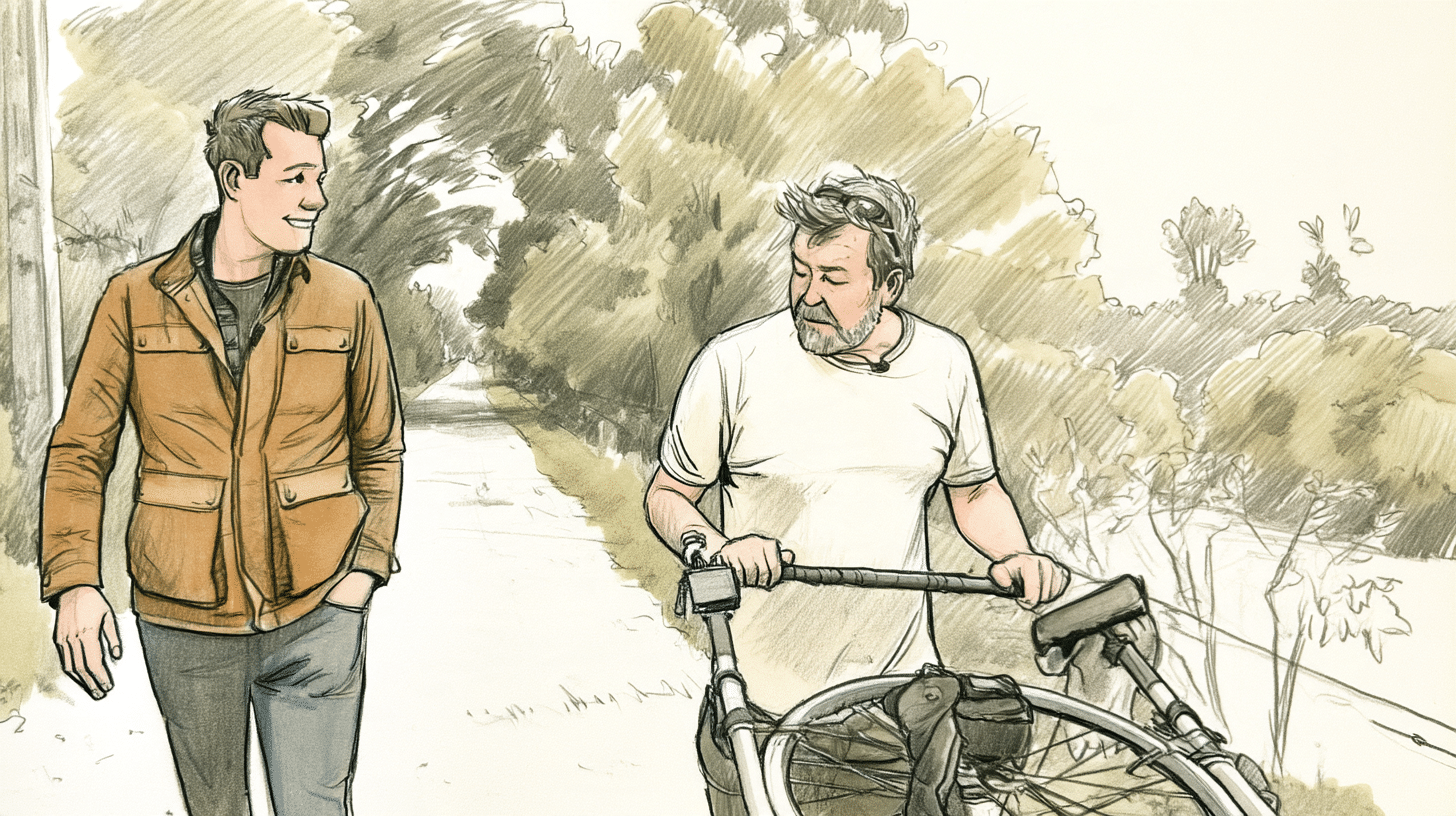
You probably do not need a cart, but the principle holds. Notice what bugs you on a walk: the sock that slips, the bag strap that rubs, the jacket that is too warm by the second kilometre. Change one thing at a time. Comfortable shoes and a pack that sits well will keep you walking far longer than willpower will.
Lesson three: let the walk connect you to people
For someone who served as a soldier, Bushby says the biggest surprise of the trip was kindness. Strangers gave him food, water, money and places to sleep, and nursed him when he was ill. He remembers people living in roadside shacks in the Peruvian desert inviting him in for a bowl of rice just to swap stories. Speaking to Sky News, he put it simply: “The world has been a default, you know, support network.”
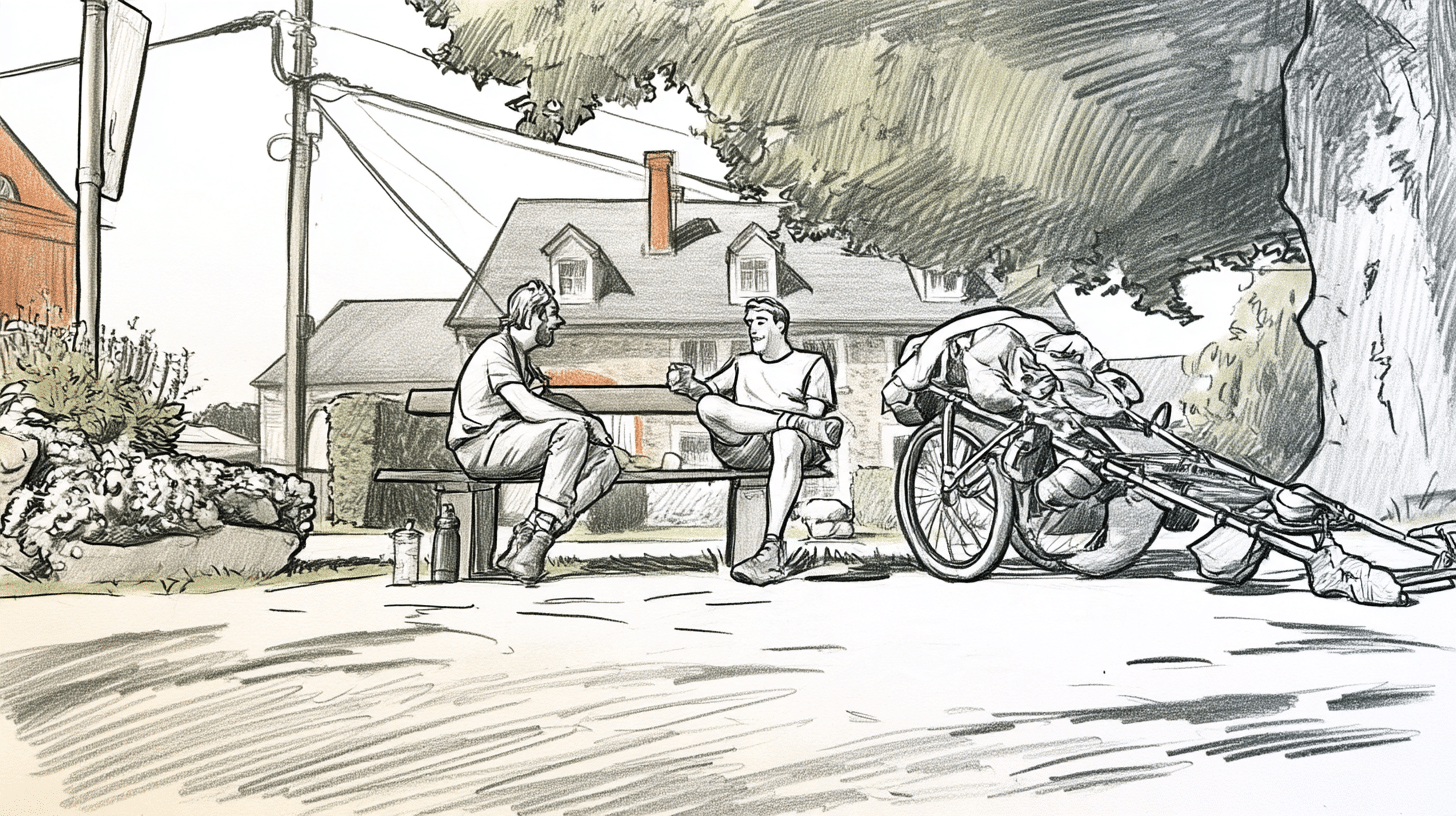
He also spoke openly with Global News about loneliness, especially on the empty plains of Mongolia, and noted that humans were never meant to travel alone. That is a gentle nudge for the rest of us. Walking is one of the easiest social hobbies going. Say hello on the path, join a local walking group, or invite a friend for a weekly stroll. The miles feel shorter in company.
Lesson four: when the plan says no, find another way
Bushby’s journey has been one long series of closed doors. The tunnel said no, so he swam. Visas ran out, so he left a country and later returned to the exact spot where he had stopped. Covid and money troubles froze him for long stretches, so he waited. As he told Global News, “There’s always a way.”
Everyday walking has smaller closed doors: rain, a busy week, a sore knee. The fix is often a plan B rather than a full stop. Walk a shorter loop, walk indoors at a shopping centre, split one long walk into two short ones. Keeping the habit alive matters more than keeping the exact plan.
Lesson five: keep a good attitude, and plan what comes next
Some of Bushby’s stories are hair raising. In his long conversation on A Mug Of Life he talks about being held at gunpoint and how, often, the person holding the gun was simply frightened. His advice was to be careful, talk calmly and “keep smiling.” He also describes the day to day reality as mundane: pushing the cart on ordinary roads, week in and week out.
That honesty is reassuring. Not every walk is magical, even for a man walking around the planet. And he is already thinking about the end. He told Sky News that finishing will be difficult, and his solution is to find another passion and another mission rather than sit around dwelling on it. If you have just finished a walking challenge, a charity event or a step goal, that is a good tip. Pick the next small goal before the glow fades.
Where his walk stands now
As of early October 2026, Bushby is back in England and walking north from Dover toward Hull, about 400 kilometres away. He told reporters on arrival that it felt good to have United Kingdom soil under his feet, and in his Global News interview he described Britain as feeling like another country after so long away, down to relearning the pound in the supermarket.
Reports put his total at around 50,000 kilometres, though figures vary between outlets, and he is expected to walk back down the street he left in 1998 sometime in early November.
The takeaway for the rest of us
You will probably never swim a sea or cross a frozen strait. But the core of Karl Bushby’s achievement is something we all already know how to do: put on your shoes, head out the door, and go again tomorrow. Find a pace you can keep, tweak your gear, walk with others when you can, and do not let one closed door end the habit. That is a walk around the world, one ordinary day at a time.










.jpg)