Tai chi walking is having a moment, and so are the ads about it. Scroll long enough and a computer generated tai chi master will promise that seven minutes a day melts your belly fat. The real practice is quieter and more useful: a slow, deliberate walk that trains your balance, settles your mind, and fits in a hallway. Here is what three popular teachers say it is, what the research supports, the beginner mistakes to skip, and an easy ten minute evening habit.
Why tai chi walking is suddenly everywhere
Monthly searches for the phrase jumped from a few hundred in mid 2025 to the hundreds of thousands this year, according to the keyword tracker Rising Trends, and the videos keep coming. A YouTube search for tai chi walking videos from the past month returned 40 uploads posted September 18 to October 18, with about 1.6 million views combined. Thirty-five of those 40 titles promise belly fat loss or weight loss.
Advertising drives a lot of that. Ann Swanson, a tai chi for health instructor and author, says reviewers of the apps behind the ads complain “that it’s hard to get their money back or it’s hard to cancel the subscription.” The YouTuber Josh Brett signed up for one himself and found a countdown timer, stacked add-ons, and a money back guarantee that depends on “consecutive days of completed workouts.” His verdict on the ripped older man in the ads: “The shredded master you just watched obviously isn’t real.”
None of that makes the practice itself fake. As Swanson puts it, “the practice of tai chi and tai chi walking is not a scam. It is legitimate.”
What it actually is
Tai chi is a centuries-old Chinese martial art performed as slow, flowing sequences called forms, which can take months to memorize. Stanwood Chang, a tai chi instructor at a Harvard-affiliated medical center, told Harvard Health in September that “Tai chi walking is basically the footwork component of tai chi forms.” You get the leg work and balance training without learning a whole routine.
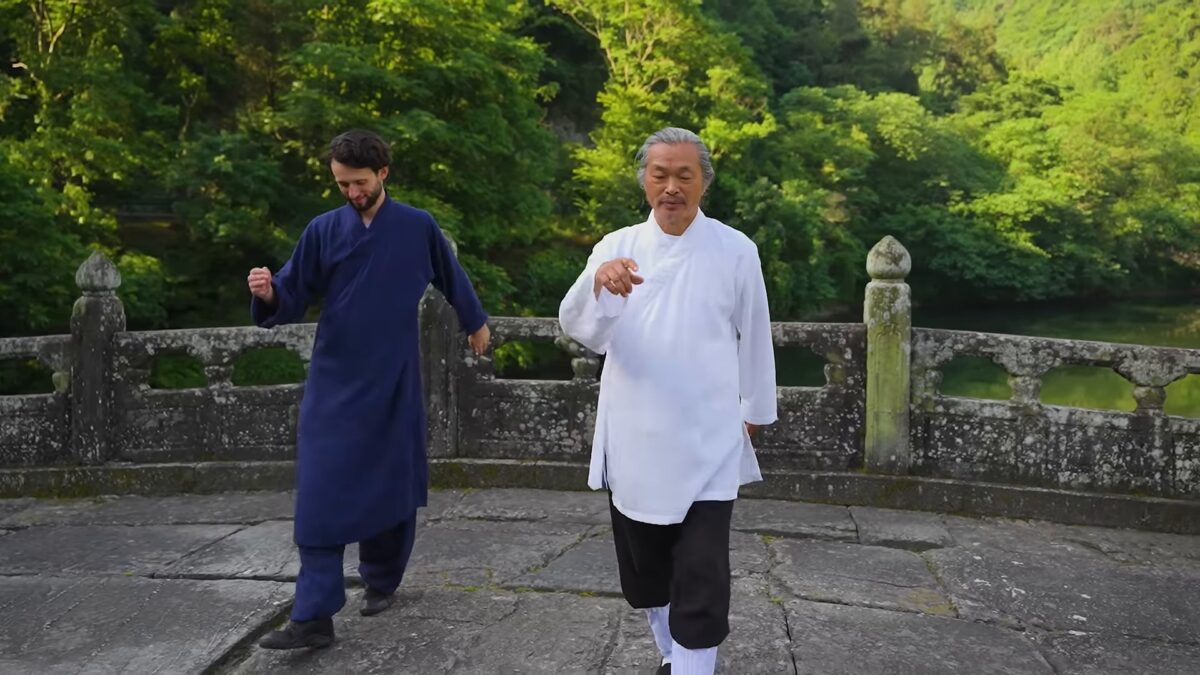
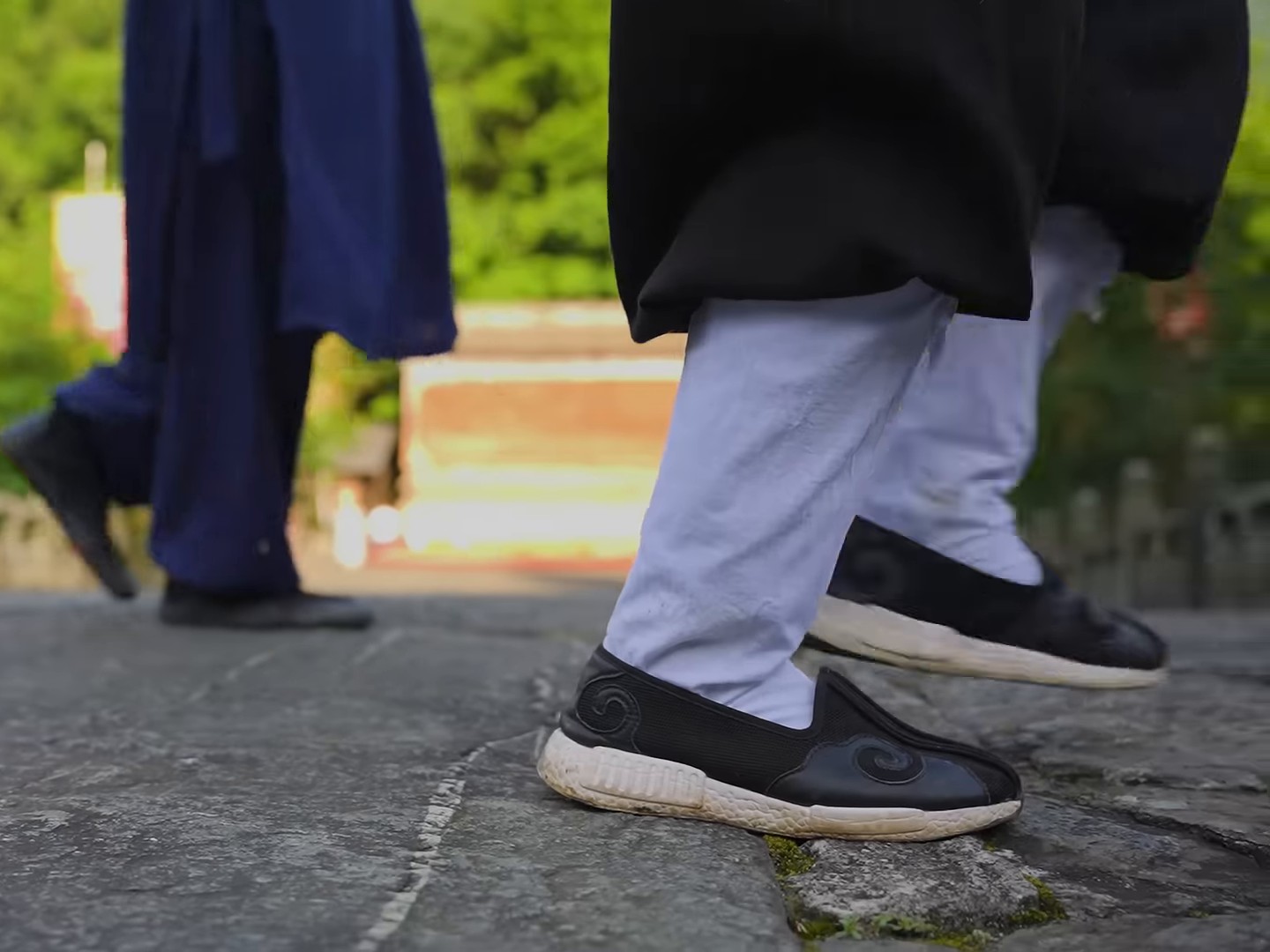
The heart of it is weight transfer. You place your foot first, then slowly move your weight onto it, so you spend far longer balancing on one leg than in a normal walk. The instructor at Phoenix Mountain Tai Chi puts the problem simply: “a lot of people walk by collapsing.” The fix: “You pour your weight from one place to another so that you flow like water.” Master Gu, the teacher who walks with George Thompson through China’s Wudang Mountains, sums up the practice in five points: solidity, a light pace, an upright posture, relaxation, and inner peace.
What the research supports, and what it does not
Tai chi has a real evidence base. A 2023 review of 24 randomized trials in older adults found that tai chi lowered the risk of falling by about 24 percent, and the benefit grew with longer and more frequent practice. Swanson calls tai chi “a gold standard” for balance and fall prevention.
Blood pressure is the surprise. In a 12 month trial of 342 adults with slightly raised blood pressure, published in JAMA Network Open, a journal of the American Medical Association, people who practiced tai chi four times a week lowered their systolic (top) number by an average of 7.01 points. People who did aerobic exercise such as brisk walking, jogging, stair climbing, and cycling on the same schedule lowered theirs by 4.61 points.
Two caveats matter. Both findings come from full tai chi programs practiced for months, not from a few minutes of walking drills, and we found no trials of the viral walking format on its own. And none of it adds up to dramatic fat loss. Chang is blunt: “Outsized claims floating around online that you can lose large amounts of weight or build bulging muscles with tai chi walking are simply false.”
Swanson’s honest version: it can support a healthy weight in quieter ways, because it is gentle on sore joints, relieves stress, and builds your sense of real hunger and fullness. Master Gu doesn’t think weight loss is the real benefit at all. To him, the point is that it is easy, so “it can make people simply start moving.”
How to take your first tai chi walk
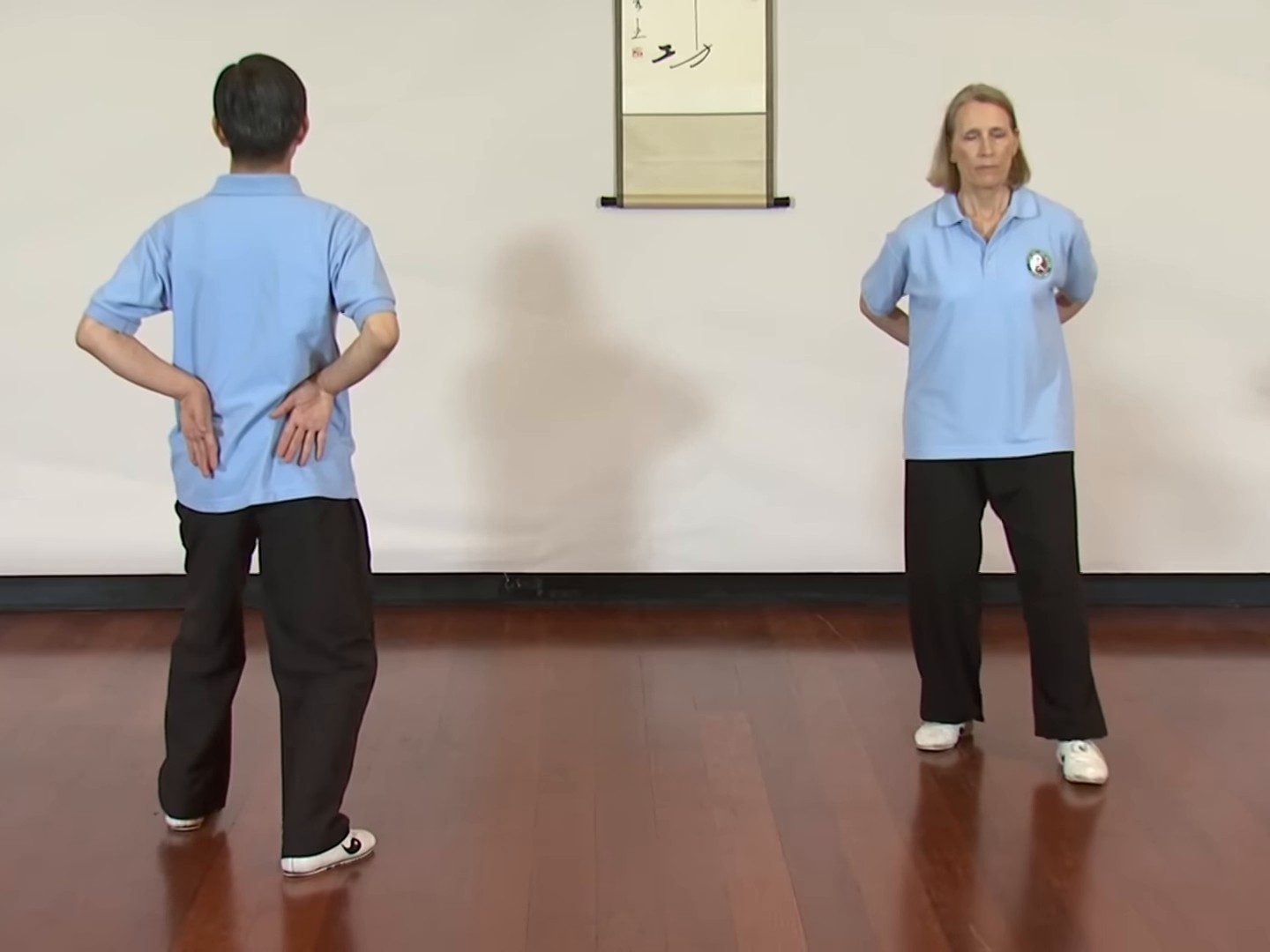
Dr Paul Lam, a Sydney family physician whose Tai Chi for Health Institute trains instructors, teaches the basic forward step in a beginner tutorial with about 478,000 views since February. Here is his sequence:
- Set up. Stand with your feet a comfortable distance apart and rest the backs of your wrists on your lower back, palms facing out.
- Sink a little. Bend your knees only as far as feels comfortable, then shift your weight onto your right leg.
- Step. Take a small step forward with your left foot. Put it down, then slowly move your weight forward onto it.
- Rock back. Shift your weight back again and lift the toes of your front foot.
- Turn and settle. Turn from your waist so those toes point slightly out, put the foot down, and move your weight forward onto it.
- Bring the back foot in. Step your back foot up near the front one, but not too close, and repeat on the other side.
If rocking back feels like too much, Harvard Health describes a simpler option: keep your feet parallel and slowly pour your weight forward without the back and forth. You can also move sideways or backward. Lam admits “it might seem very simple and not very exciting to start with,” but says the patient weight shifting makes the rest of tai chi easier and more enjoyable.
The mistakes teachers keep correcting
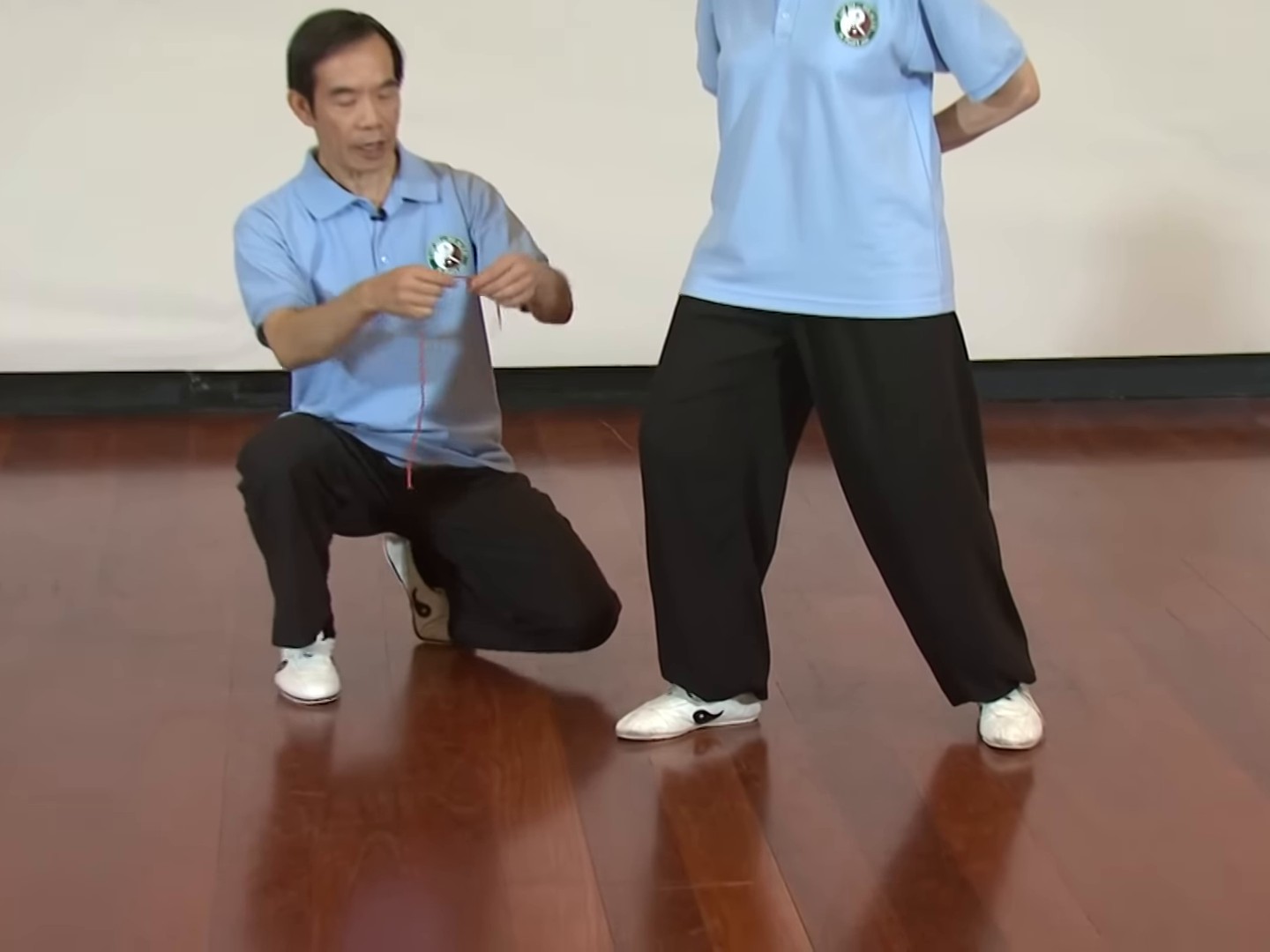
- Bending too deep. In Lam’s video, Janet, a doctor and tai chi teacher, demonstrates the limit: if you draw a line down from your kneecap, it should not pass your toes. Bending less and standing taller is fine, and if your legs tire, Lam says “it’s quite okay to stand up.”
- Marching. Master Gu says there is no need to lift your feet high, as long as they do not scrape the ground. Roll from heel to toe instead. Thompson admits he had been placing his feet “like laying down bricks.”
- Crossing your feet or staring down. Keep each foot on its own track and look ahead at where you are going, as in a normal walk.
- Pushing. The Phoenix Mountain instructor’s cue is to tilt and let your weight carry you forward, “Not by forcing, not by pushing.”
Make tai chi walking a ten minute leisure habit
Tai chi walking suits the dark months: no gear, no gym, no daylight needed, and it pairs naturally with other low key pleasures. That is the idea behind leisure stacking, combining activities that make each other better. A simple three week start:
- Week 1, five minutes a day: Lam’s forward step in a hallway right after dinner, with a counter or a sturdy chair within reach if your balance feels shaky.
- Week 2, ten minutes: add the sideways and backward versions, then finish with a cup of tea and no phone.
- Week 3, take it outside: find a quiet stretch of sidewalk or park path and add the arm swing from Thompson and Master Gu’s video, with each arm moving with the opposite foot. Master Gu calls this “immortal walking.”
If you liked the playful, low impact feel of rope flow, this is its quiet cousin. And if your goal is simply to walk more, our look at what Karl Bushby’s walk around the world teaches everyday walkers pairs well with it: a brisk walk for distance, a slow one for balance. If you have fallen recently or have a condition that affects your balance, check with your doctor first and practice next to something sturdy.
How to tell a real teacher from an ad
Swanson borrows a rule from research: “extraordinary claims require extraordinary evidence.” Be wary of promises that your eyes will change in a week, of countdown timers, and of apps that hide the price behind a long quiz. She also warns that “a lot of the rising content on tai chi and chi gong online right now isn’t even from real people.” Look for a teacher who shows their face, explains each step, and offers easier options, like Lam’s permission to stand up or Swanson’s note that you can practice with a cane or walker. Several real teachers, including Swanson and Thompson, offer free beginner courses.
Slow walking will not give you a six pack. It might give you steadier legs, a calmer evening, and ten minutes a day that are entirely yours, which is a better deal than anything in those ads.
Watch: three tai chi walking lessons from real teachers
Dr Paul Lam breaks the forward step into small parts and teaches it one piece at a time.

George Thompson walks an old pilgrimage path in the Wudang Mountains with Master Gu, covering the basics, the common mistakes, and the arm swing.

Ann Swanson takes apart the belly fat ads and explains what tai chi walking can realistically do for your weight.