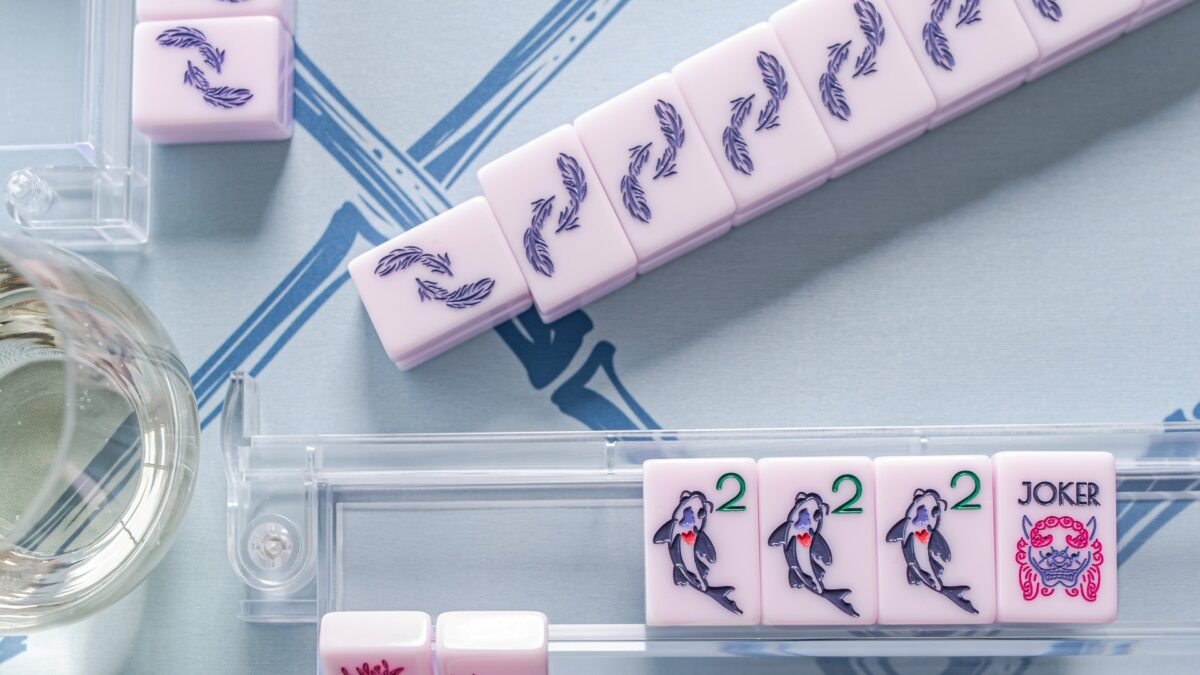
If your feed is suddenly full of clicky tiles, pastel racks, and four friends around a table, you are looking at American mahjong. It is a four-player matching game with a yearly scorecard, and it is one of the clearest hobby breakouts of 2026: tactile, social, and easy to host at home without turning the night into a screen session.
Why American mahjong is having a moment
Google Search put numbers on it. In a July 2026 Trends deep dive on “touch grass” hobbies, searches for “mahjong for beginners” were up about 230 percent year over year, and “mahjong lessons near me” had doubled since January. The same report flags “mahjong dinner party” as a breakout hosting theme, next to the broader wave of analog “grandma hobbies” like knitting and cross stitch.
Mainstream coverage followed the search spike. CNN Business reported in September 2026 that American mahjong clubs, studios, and tile brands are spreading through suburbs, especially in the South, after Yelp searches for mahjong clubs jumped thousands of percent in 2025. The piece also notes a real cultural conversation: the game has deep roots in Chinese communities and a separate American tradition shaped by the National Mah Jongg League (NMJL), and not every fancy new club or $800 set sits comfortably with that history. Worth knowing before you treat it as only a trend.
For Leisure Stacking readers, the draw is simpler. It is a weekly table habit you can learn once and keep for years, the same spirit as leisure stacking itself: pick something restorative, make it easy to repeat, and let the social part do some of the work.
What American mahjong is (and what it is not)
Mahjong started in China in the 1800s and reached the United States in the 1920s. In the 1930s, a group of women formed the National Mah Jongg League, standardized American rules, and began publishing an annual card of legal hands. That card is still the spine of the modern American game.
American mahjong is not the same as Chinese, Hong Kong, Singaporean, or riichi styles. The biggest difference, as Southern Sparrow’s Jessica puts it in her Mahj 101 opener, is the NMJL card: a fresh list of hands each spring, usually in April. It is also not the solitary phone game where you match open tiles on a pyramid. You want a four-person table game with racks, jokers, and that year’s card.
The object is blunt. Be the first player to arrange 14 tiles so they match one complete line on the card. There is no second place. Jessica’s line for competitive players is that you either make mahjong or you do not.
What you actually need to start
Jessica’s first episode is useful because it pushes back on the accessory spiral. You do not need monogrammed bags, themed drinkware, or a studio membership to play. You need:
- Four people. Three friends plus you is the standard table.
- An American mahjong tile set. Look for a set that includes jokers (typically eight). Vintage Chinese sets often miss them.
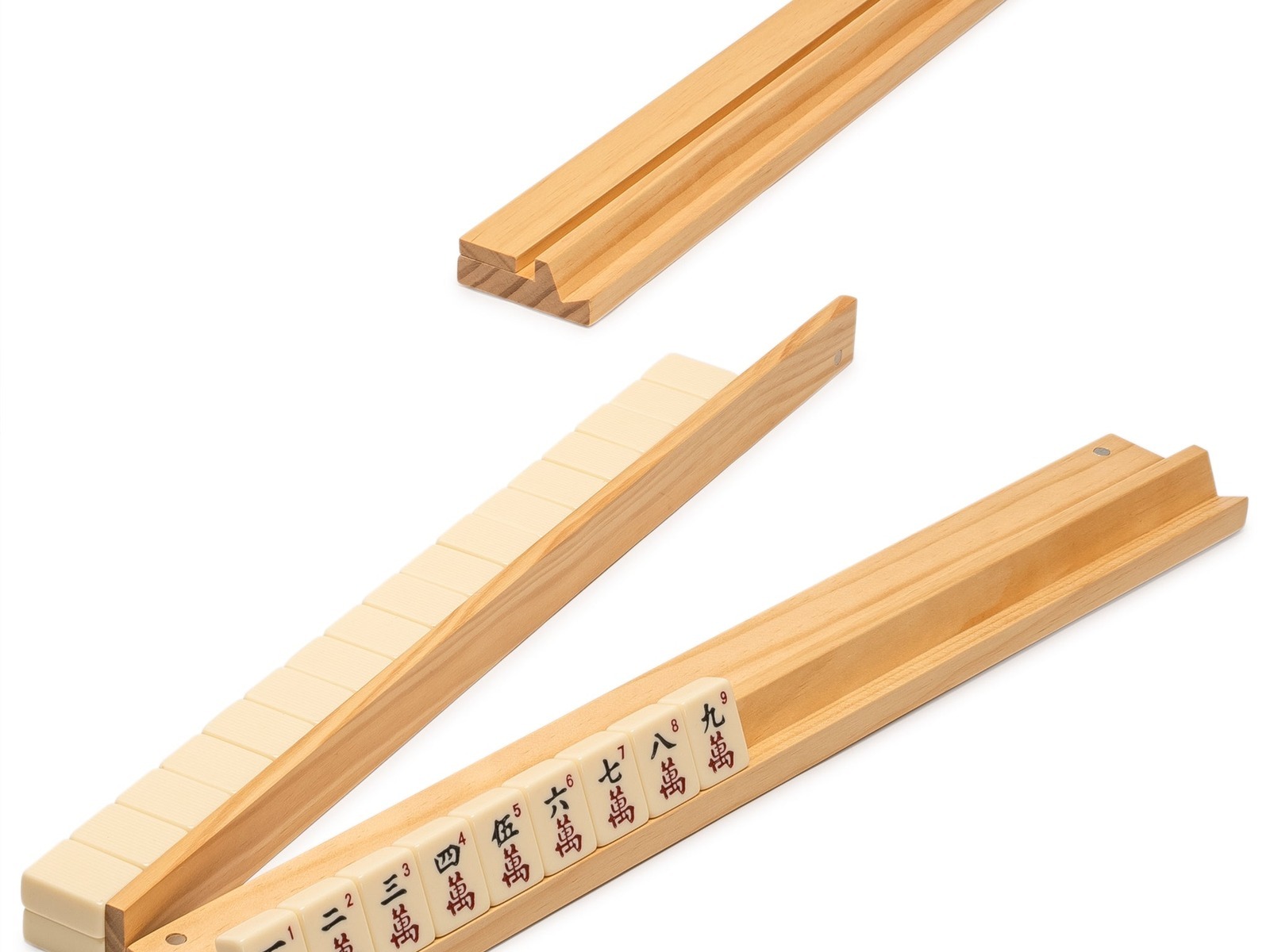
- Four racks. Players keep their hands on racks, not fanned in their fingers.
- A current National Mah Jongg League card for each player. Hosts sometimes buy four cards; guests often bring their own.
AGB Art’s beginner series adds one practical warning: buy the official card from the National Mah Jongg League site. Counterfeit cards show up on big marketplaces with the wrong hands.
You can spend a lot on a designer set, but you do not have to. A basic set, four cards, and a clear table are enough to start.
Learn the tiles before you chase a hand
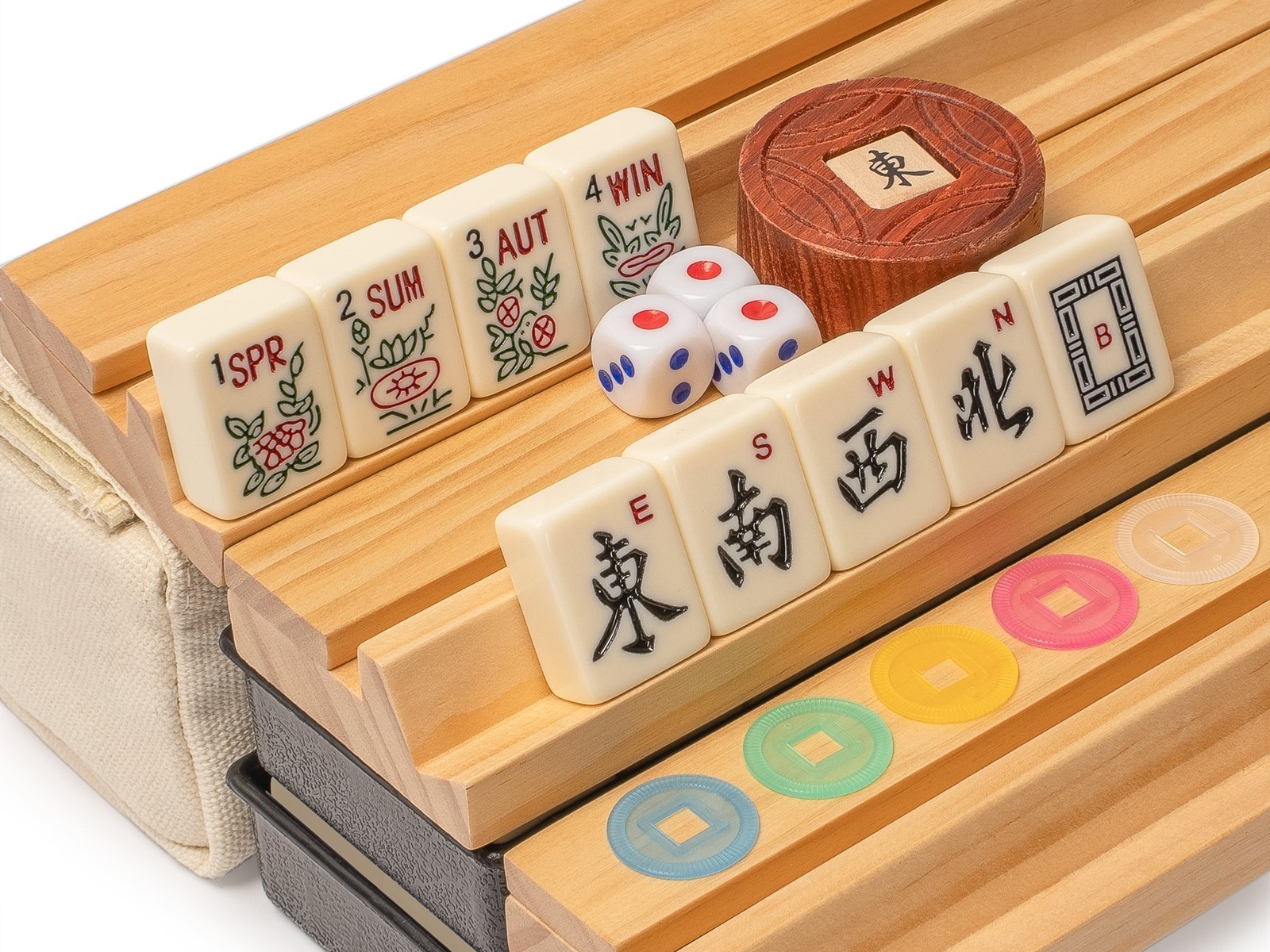
AGB Art’s first lesson is almost all naming practice, and that is the right first homework. American sets use three suits of numbered tiles, plus honors and wild cards:
- Cracks (short for characters): red Chinese numerals, one through nine, four of each.
- Bams (bamboo): mostly green sticks; the one bam is usually a bird.
- Dots (circles): dotted circles, one through nine.
- Dragons: red with cracks, green with bams, white (often called “soap”) with dots.
- Winds: East, South, West, North.
- Flowers: eight tiles that all match each other for card purposes.
- Jokers: eight wild tiles with special limits.
Useful vocabulary from the same video: a pair is two matching tiles, a pong is three, a kong is four, and a quint is five (you need a joker for that). You will also see those patterns written as numbers and colors on the NMJL card.
Spend one evening naming tiles out loud before your first real game. It cuts the panic when someone asks whether you need a green dragon or a soap.
How a round actually moves
Gather Together Games packs a full round into one clear tutorial. The flow looks like this.
1. Build the wall and deal. Players shuffle face down, then each builds a wall two tiles high (nineteen stacks for American play). Dice pick East (dealer). East starts with 14 tiles; everyone else starts with 13.
2. Play the Charleston. Before anyone draws from the wall, players pass unwanted tiles. Gather Together Games teaches the pass order with the acronym ROLLER: right, opposite, left, then (if everyone agrees) left, opposite, right, plus an optional courtesy pass between opposite players. Jokers can never be passed.
3. Draw and discard. East discards to open play. On your turn you draw from the wall, then discard one tile. The latest discard can be called by another player if it completes a pong, kong, quint, or similar set for an exposed combination (or completes mahjong). Older discards are dead.
4. Declare mahjong. When your 14 tiles match a card line, say so. Exposed hands may use called tiles; concealed hands are stricter. Payouts sit next to each hand on the card. If the wall runs out with no winner, the round is a draw, and the next East seat rotates.
You will not memorize the whole card on night one. Pick a simple line, Charleston toward it, and watch what other people expose. Confidence comes from repetition, not from buying a prettier set.
Where it fits in a leisure week
American mahjong wants a protected block of time more than a two-minute snack. A teaching night can run ninety minutes; a comfortable social game often fills an evening. That makes it a strong candidate for the higher-energy or planned social slots in our guide to energy-based time blocking, not for the drained couch window where a cozy game or a short stretch fits better.
A few practical ways to keep it going:
- Same night each week. Pick a Tuesday or Sunday and protect it the way you would a run club.
- Rotate hosts. One person brings the set, everyone brings a card, snacks stay simple.
- Lessons first, then open play. Watch one beginner video together, play a slow teaching round, then play for real.
- Borrow before you upgrade. Try a friend’s set or a community class before you spend club-level money on tiles.
The game rewards the people who show up more than the people who shop first. That is the Leisure Stacking version of the trend: a recurring table, four chairs, and a card that resets every April so beginners are never permanently behind.
Watch: three beginner lessons in American mahjong
Southern Sparrow’s Mahj 101 opener covers what you need before your first game.

AGB Art’s absolute beginners guide starts with learning the tiles.

Gather Together Games explains how to play American mahjong from start to finish.