Needlepoint is having a big comeback, and it is easy to see why. You stitch colorful wool or silk thread over a stiff, open canvas that already has the design painted on it, so the picture is done for you and your job is to bring it to life one small stitch at a time. Your hands are busy, so your phone stays down, and the finished piece becomes something you actually use, like an ornament, a bag charm or a pillow. This guide to needlepoint for beginners skips the history lesson and gets you from the shop to your first stitch, with advice from popular video teachers.
Why needlepoint for beginners is suddenly everywhere
The numbers back up the feeling. Michaels, the craft store chain, reported in March that needlepoint searches were up 251 percent year over year, and Google said this summer that needlepoint is the top trending beginner craft kit as knitting, crochet and other so called grandma hobbies come back. On YouTube, a search for needlepoint videos uploaded in the past month turned up 125 of them from 70 different channels, many of them cozy stitching diaries with titles like “A Week of Needlepoint.”
The canvases have changed, too. When Kenzie Elizabeth, a stitcher who runs her own canvas brand, toured Manhattan needlepoint shops for a September video, she noticed that newer, younger stitchers have arrived and a lot of canvases are now “geared younger,” with sayings, trendy designs and little bag charms. Her last stop was Penny Linn’s new New York City store.
What makes needlepoint so satisfying
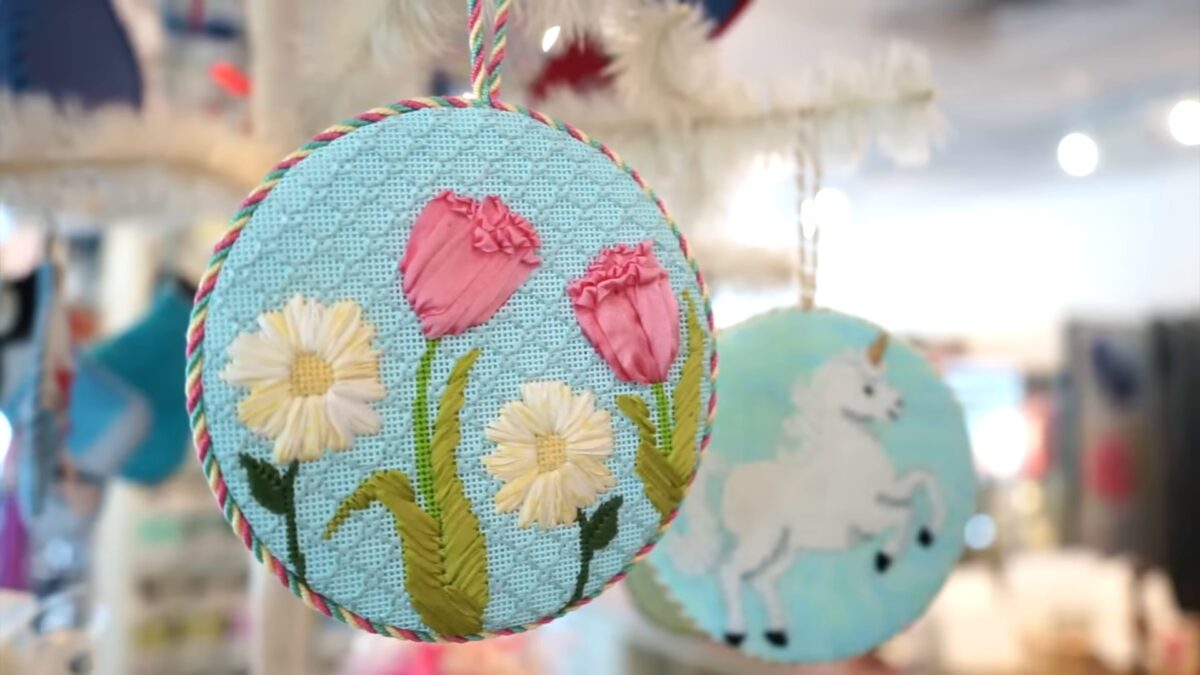
Think of it as a paint by number kit where you color with thread. The painted canvas tells you which color goes where, so your choices are small and pleasant, like which green to use for the leaves. Each stitch covers one crossing in the canvas grid, and you get to watch the picture fill in, row by row.
Ellen, the teacher behind Serendipity Needleworks, says stitching is “meant to be the calm part of your day,” and her mantra is a good one to borrow: “Needlepoint rewards patience, not perfection.” It is also more social than it looks. Kenzie Elizabeth recommends taking a class at a local needlepoint shop, partly to learn hands on and partly because the community is “so much of the fun of it.”
Pick a first canvas you will actually finish
Your first canvas matters more than anything else you buy. Kenzie Elizabeth’s beginner formula is a 13 mesh canvas with two or three colors and mostly straight lines, like a short saying. Mesh is the number of holes per inch: Eva Howard Designs demonstrates by laying a ruler on a canvas and counting 13 holes in one inch. Thirteen mesh has bigger holes and fewer stitches than the finer 18 mesh, so you finish sooner.
Next, choose between a kit and a shop visit. Jessica of Cutesy Crafts says “it is easier to start with a kit that already comes with everything that you need in it,” because the thread is already matched to the canvas. A shop can do the same thing in person. Tell them you are a beginner and ask them to kit your canvas, which simply means picking the right threads for it. If the vocabulary feels like a lot, Kenzie Elizabeth has some reassurance: “I swear it is not as overwhelming as it sounds.”
One honest note on cost: a hand painted canvas is priced like the handmade art it is, since a person painted it. A kit or a small round ornament canvas is a gentler way in than a big pillow.
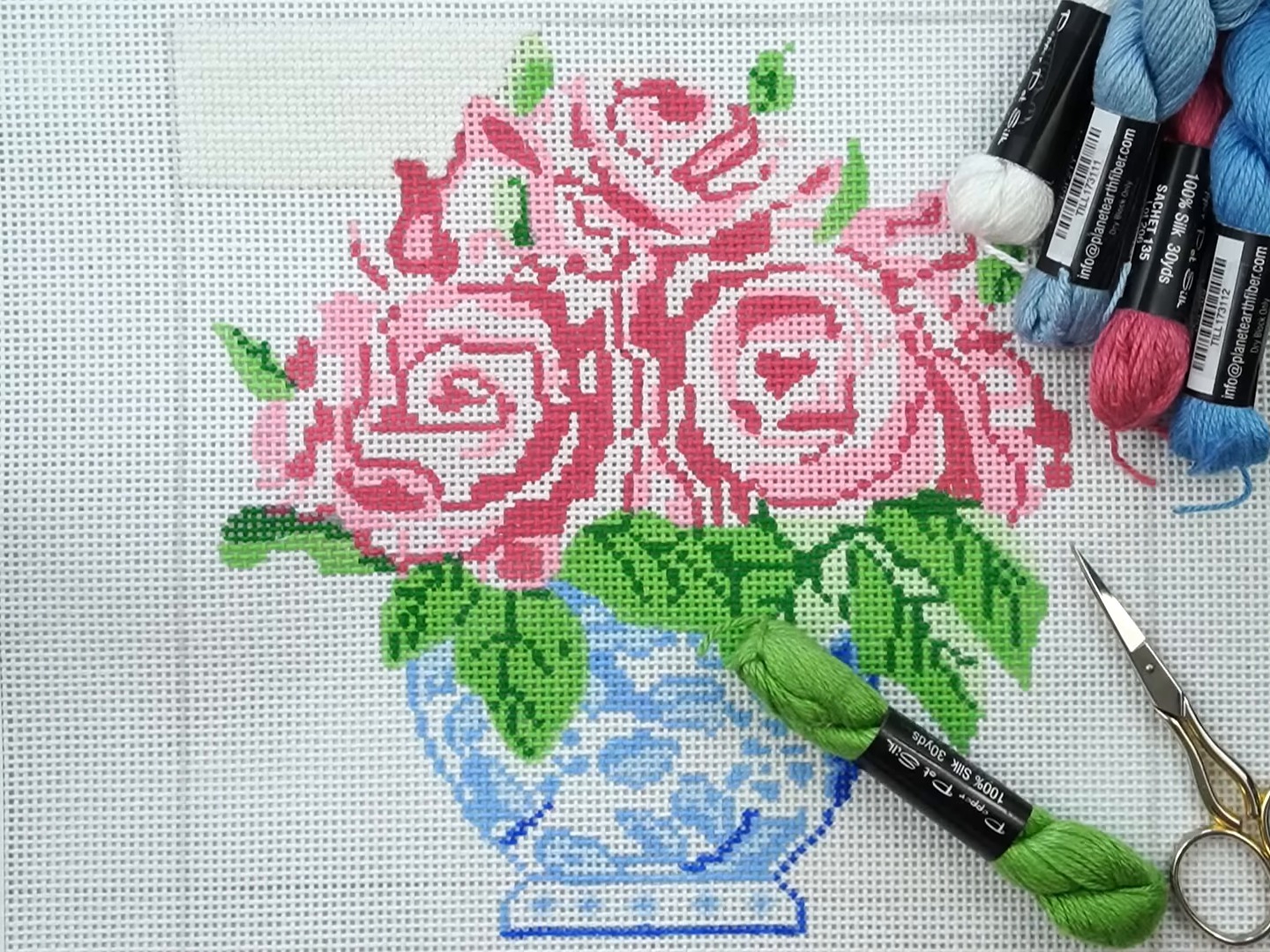
The short supply list
- A painted canvas. Start with 13 mesh.
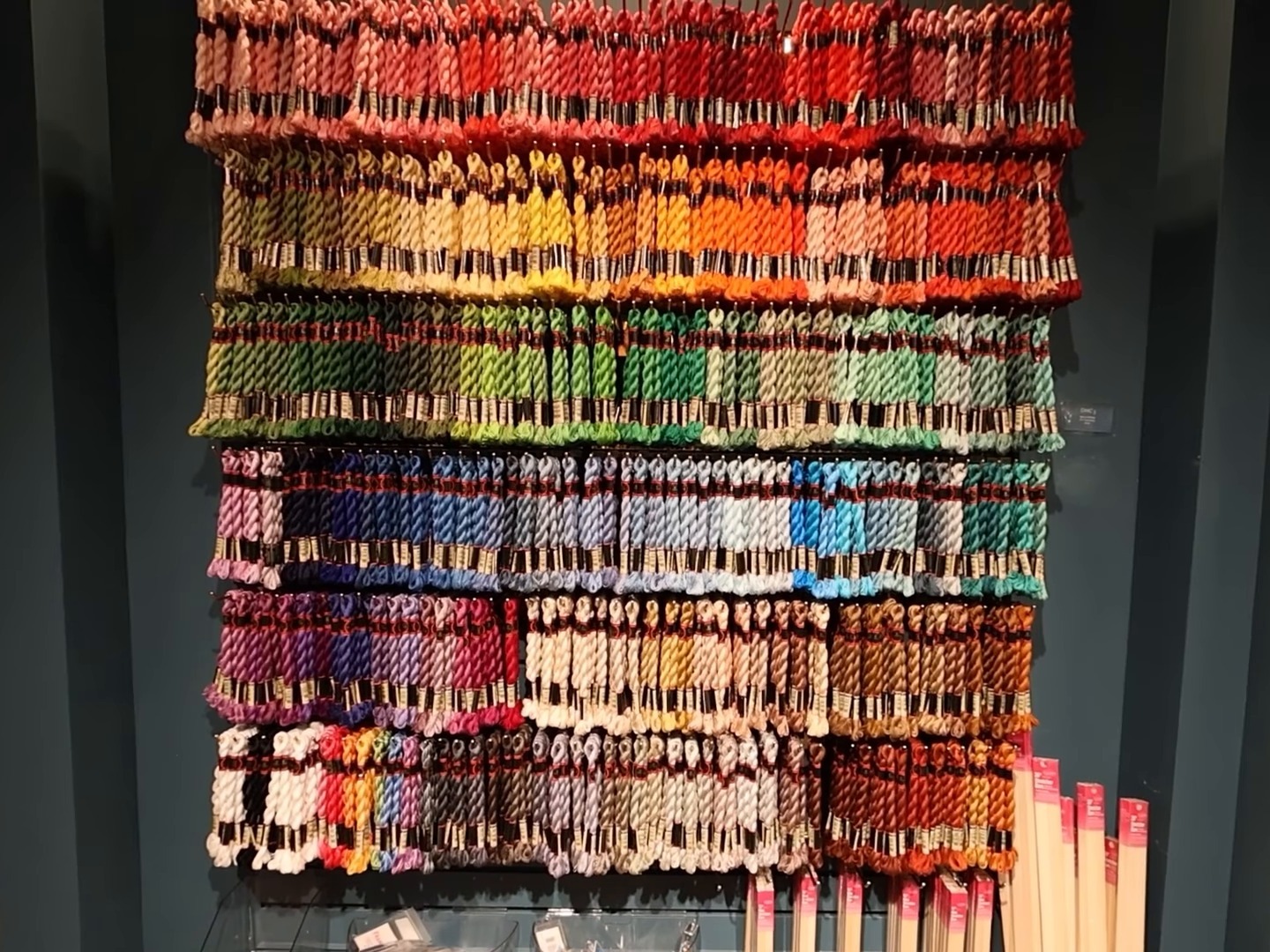
- Thread matched to the mesh. Jessica’s rule of thumb: thick enough to cover the canvas with no gaps, but not so thick that it is hard to pull through the holes. Keep the paper tag. It lists the dye lot, and Eva Howard Designs warns that thread from a different dye lot can show up as a visible color change.
- A tapestry needle, which has a blunt tip and a wide eye. Eva Howard Designs uses a size 20 on 13 mesh and a size 22 on 18 mesh. Serendipity Needleworks shares a neat check: drop the needle into the canvas, and if it stops at the eye, it is the right size.
- Small embroidery scissors with a fine tip, so you can snip close to the canvas.
- Stretcher bars and brass tacks, a simple wooden frame you tack the canvas onto. Jenny, the director of education at Needlepoint.Com, says it will “keep your project from distorting as you stitch.”
Learn one stitch first: the continental
Most beginner lessons start with the continental. Jenny calls it “the most basic needlepoint stitch that can go anywhere on your canvas.” Here is the sequence, pulled together from the lessons by Jenny, Jessica and Penny Linn:
- Cut a manageable thread. Eva Howard Designs cuts one about the length of your arm, and Jessica goes a little shorter, from fingertip to elbow. Longer threads tangle.
- Thread the needle by folding, not poking. Fold the thread over the needle, pinch the fold tight, slide the needle out, and press the eye down over the fold.
- Start with a waste knot. Knot the end and go down through the front of the canvas about an inch from where you will begin, in line with the row you are about to stitch. Your stitches cover the tail on the back, and you snip the knot off when you reach it.
- Slant every stitch the same way. Come up at the bottom left of a canvas crossing and go down at the top right. Penny Linn’s tutorial has a memorable way to say it: go from “Arizona to New York.” Work one row from right to left, then come back the other way, which the same video calls a “return flight home” from New York to Arizona.
- End cleanly. Flip the canvas over, run the needle under four or five stitches on the back, and trim.
Once that feels natural, learn basketweave for big backgrounds. Eva Howard Designs calls it “the most durable of stitches” and uses it to keep the canvas from pulling out of shape. Jessica’s habit is to stitch the background first, so colorful threads do not get dragged through to the front of the light areas.
Three beginner mistakes to skip
- Pulling too tight. Serendipity Needleworks says to stop pulling as soon as you feel resistance from the thread on the back. A frame helps keep your tension even.
- Leaving knots on the back. Knots make lumps and can pop through to the front over time. A waste knot that you cut off later is fine.
- Fighting a twisted thread. Thread twists as you stitch. Penny Linn’s tutorial says that is “completely normal and totally fixable.” Let the needle hang for a moment so the thread unwinds.
Make it a weekly leisure ritual
Stitch while an audiobook or a podcast plays, and you are leisure stacking at its easiest: two good things in one evening, with no screen in your hands. If you want company, look for a beginner class or an open stitching night at a local shop. Kenzie Elizabeth’s tip before you head over: “Most needlepoint stores are closed on Mondays.”
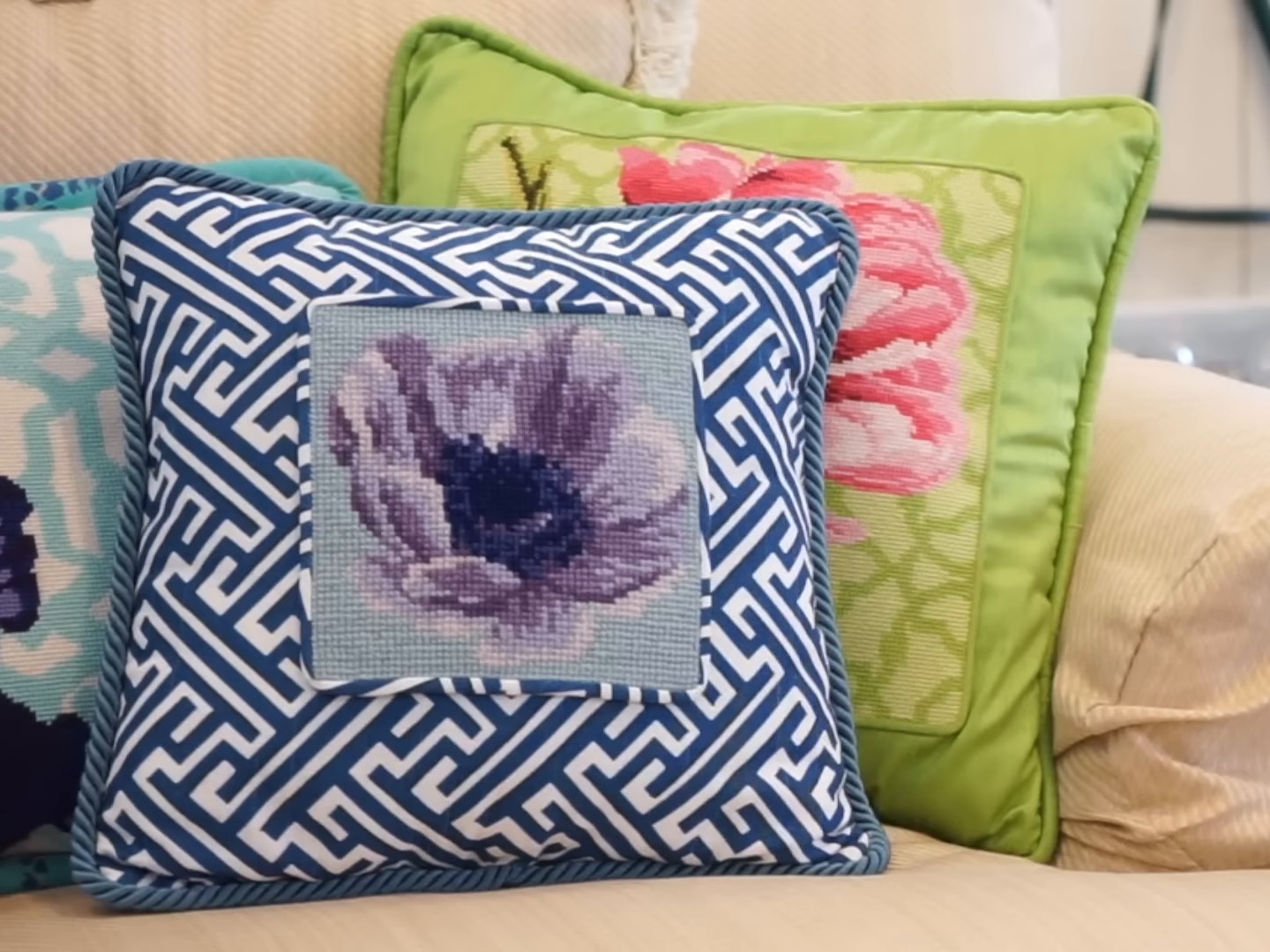
A first canvas also makes a natural project for the last weeks of the year. A small ornament started this fall can become a gift, and many shops offer finishing, the step that turns a stitched canvas into a pillow, an ornament or a bag charm. If you want a shop to finish yours before the holidays, ask about timing early, since finishers get busy.
If you love the feeling of making something you will actually use, thrift flipping scratches a similar itch with clothes. For now, pick one small canvas, learn one stitch, and give it a few calm evenings.
Watch: three needlepoint lessons for beginners
Jenny from Needlepoint.Com covers the supplies, the waste knot and the continental stitch in about five minutes.

Jessica of Cutesy Crafts stitches a painted rose canvas from a kit and shows how to secure each thread without leaving a knot.

Kenzie Elizabeth tours four Manhattan needlepoint shops and shares what to buy and what to ask for on your first visit.